



«
The share of photovoltaic panels installed on Brazilian warehouses remains low today, but new projects incorporate this component
»
In Brazil, logistics between resilience and transformation
28 Aug 2022
Reading time : 5 minutes
During his visit to SITL 2022, Pedro Moreira, president of Abralog, assessed Brazil’s logistics sector as it emerged from the Covid-19 pandemic amid a tense international context. It was an opportunity to discuss synergies with his French counterparts at Afilog, as well as the global situation and, of course, the issue of photovoltaic panels on warehouses.

What share does logistics account for in the Brazilian economy?
Pedro Moreira : Logistics accounts for approximately 12.5% of Brazilian GDP, which is a satisfactory proportion given that it stands at around 10% in Europe and 8% in the United States. But this figure is also explained by our shortcomings and the costs they generate, such as an unbalanced transport network: 61.1% of our activity relies on highways, followed by railways (20.7%), waterways (13.6%), and finally pipelines (4.2%) and air transport (0.4%). We do not have a well-developed rail network, and we still make little use of river transport or transport along our vast coastline. Multimodality is still a distant prospect. All these factors result in longer transit times and higher inventory levels, creating bottlenecks and increasing logistics costs.
For many years, successive governments launched short-term logistics and infrastructure plans that changed constantly. But the former Brazilian Minister of Infrastructure, Tarcísio Gomes de Freitas, and his successor, the current minister Marcelo Sampaio, have truly changed things. A genuine, robust, long-term infrastructure plan has been put in place. Since 2019, Brazil has privatized 81 assets, including ports, airports and roads, generating more than $20 billion in investment. And all of this continued despite the pandemic, which is remarkable. But we must ensure this plan is properly implemented and maintains its pace of execution. Thanks to this, Brazil is on track to have a well-developed, balanced transport infrastructure in the years ahead.
How did Brazilian logistics overcome the Covid-19 crisis, and what lessons can you draw two years later?
Pedro Moreira : We learned a great deal from this pandemic, which acted as a revealer: companies that were able to adapt could reinvent themselves, become more efficient and overcome the crisis. In Brazil, we experienced no supply chain disruptions during the pandemic, which is highly satisfactory because historically we did not have a very developed culture of collaboration, and companies were rather reluctant to share information. But the pandemic upended all that, and competitors now communicate much more with one another to prevent an overall disruption.
The pandemic also accelerated the shift toward digitalization. Previously, many companies had a five-year agenda in this area. Now, they know they must be able to plan only 6 or 12 months ahead, which is a major change. Another figure also illustrates this profound shift: before Covid-19, e-commerce accounted for 5% of Brazilian commerce. From 2019 to 2021, that figure tripled, reaching nearly 15%, and forecasts point to 25% in the years ahead, which is enormous.
What could be the consequences of the current situation in Ukraine for Brazilian logistics and, more broadly, for Latin America?
Pedro Moreira : The situation we are experiencing has caused disruptions in supply chains. This affects not only organizations in Brazil, but around the world. We are seeing delays and longer lead times, supply shortages, a lack of visibility, price volatility, and so on. This is prompting companies to refocus on more regional supply chains. As a result, Brazil now knows how important it is to strengthen ties with other Latin American countries, the United States and Europe in order to avoid shortages. Russia, for instance, is the world’s leading producer of fertilizers, and agribusiness accounts for 35% of our GDP. Consequently, the risk of supply shortages in the coming months is very real. These are global consequences that do not spare Brazil, and we must naturally be concerned about them.
How many square meters of photovoltaic panels are installed on Brazilian warehouses?
Pedro Moreira : Out of a total of 20 million square meters of Class A warehouses, fewer than 10% are currently equipped with photovoltaic panels. Although Brazil is energy self-sufficient, it is experiencing its worst water crisis in 90 years, which has driven up electricity prices. Grid electricity can account for up to 25% of warehouses’ total costs, prompting companies to turn to other alternatives such as solar and wind power, both of which are growing strongly.
«
France has developed very good logistics practices, and it is a model we would also like to adopt
»
This share remains low today, but new projects incorporate this component. The slow pace of the transition is explained by the cost of panels and lithium batteries, which does not yet make electricity storage profitable. In addition, we depend on imports of lithium from China, where availability is limited and subject to high import duties. However, lithium-ion battery capacity could increase more than fivefold by 2030, helping to reduce costs, improve return on invested capital and accelerate the expansion of solar energy. In a country like Brazil, which enjoys very high levels of sunshine, photovoltaic panels on warehouse roofs offer significant potential that we must be able to harness over the medium and long term.
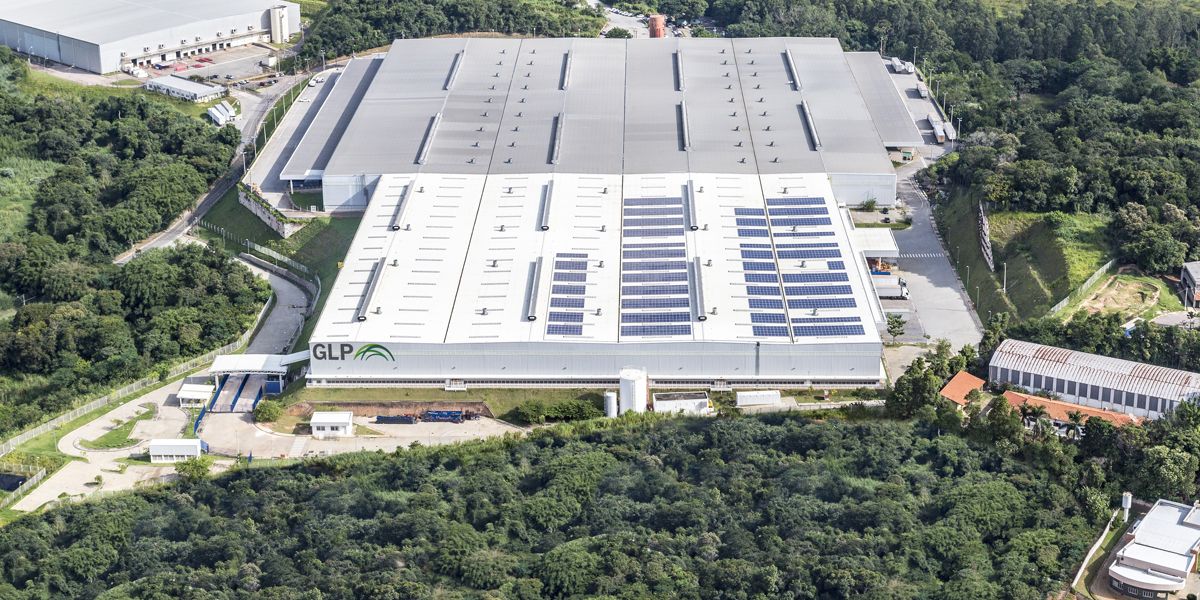
© GLP Brazil Louveira VI
A year and a half after the partnership forged between Afilog and Abralog, what lessons have you drawn from this collaboration and its benefits for both associations?
Pedro Moreira : Afilog and Abralog have known each other for a very long time, thanks to several meetings each year at SITL. We began communicating more regularly during the pandemic to identify how to join forces and create better collaboration in the service of logistics. I believe France has developed very good logistics practices, particularly in urban logistics, and it is a model we would also like to adopt. Brazil represents great potential for France in terms of investment in real estate and technology, etc.
What do urban logistics in France and Brazil have in common, and how can the two countries learn from their respective experiences?
Pedro Moreira : France undoubtedly offers efficient urban logistics models from which we should draw inspiration. In the Greater Paris region, we see urban terminals with rail and river connections that greatly facilitate transfers, store replenishment and last-mile distribution—something we do not have in our metropolitan areas.
I believe the two associations can jointly build a strong common program, sharing their knowledge and practices to generate new opportunities for their members. We have already organized several webinars with the aim of conducting comparative studies, for example on renewable energy: we can assess experiences and differences, and take these lessons into account to implement suitable solutions. We will also create delegations to conduct visits in both countries.

Pedro Moreira, president d’Abralog


