



How Bic reinvented its logistics
If Bic, the manufacturer of pens, lighters and razors, has enjoyed unbroken success for nearly 80 years, it owes much of it to its logistics organization, which knows how to adapt to the vagaries of the world. Here’s how.

A flagship of French industry for nearly 80 years, Bic has remained a family-owned group, led since 2018 by Gonzalve Bich, a representative of the third generation. The company has remained, and continues to remain, at the forefront thanks to its agility and ability to evolve with the times. In that respect, Bic’s logistics strategy, which has changed rapidly in recent years, is a perfect example of this ability to “move the lines.”
For Bic, as for many industrial groups, there was a before and after the Covid crisis. Recall the disruption of 2020: borders closed around the world, with flows of people and goods brought to a complete halt for months on end... The result was a spectacular increase in transport costs: the price of a container rose fivefold during 2020, from $2,240 in 2019 to $9,950 at the end of 2020, according to the Freightos Baltic Index.
Although rates have since returned to more acceptable levels, this major international upheaval has left its mark, impressing on everyone the indelible fact that “it could happen again.” And since then, an energy crisis has compounded matters, this time driving up fuel prices, undermining all the fragile balances of the carefully designed logistics organizations of the past.
Bic, a group with highly globalized logistics
This is all the more true for a company like Bic, which manufactures products with low unit value (pens, lighters and razors): by definition, fixed costs have a greater impact on the final production cost. This is why it is crucial for the group to protect itself against any sudden variation that could throw a damaging spanner into the works of its supply chain. A fortiori when, as in its case, it is so internationalized, with 24 plants spread across four continents, including six in France (in Redon, Longueil-Sainte-Marie, Marne-la-Vallée, Guidel, Montevrain and Samer).

To adapt to the new realities of global logistics, marked by greater uncertainty, Bic has therefore overhauled its entire organization. Until just a few years ago, operations were highly centralized and vertical, with all decisions coming from and going through its headquarters in Clichy (92). That model is no longer on the agenda. The time has now come for regionalization. The idea is for each of the 24 plants to specialize in one activity and serve a local market. Above all, the aim is to give each region greater autonomy to manage its activities as closely as possible to its own needs. “We have moved from a culture of centralized decision-making to regional teams dedicated to execution, with an autonomous organization, from the strategy to be adopted through to its implementation,” a former supply chain manager told Republik Supply.
Sophie Legrand, director of the Bic Razors plant in Longueil-Sainte-Marie (60), confirms this organization in a profile devoted to her in the trade magazine LSA: “Strategic decisions concerning margins or the final price of the product belong to the group. For my part, I am responsible for keeping down the cost of what comes out of the plant,” she explains.
A local approach to logistics is now recommended
In practical terms, each plant can organize itself as it sees fit, provided it ultimately meets the targets set by the group. This is the full application of the new end-to-end approach adopted as part of the Horizon strategic plan, drawn up at the end of 2020. It was a way to simplify processes and reduce their complexity, Bic promised at the time. The principle behind this end-to-end approach? It gives each plant an overall view of its supply chain rather than confining it to a single small link. It is, in short, the same logic as that of a general on a battlefield: if they can take in the theater of operations at a glance, they maximize their chances of making the right decisions...
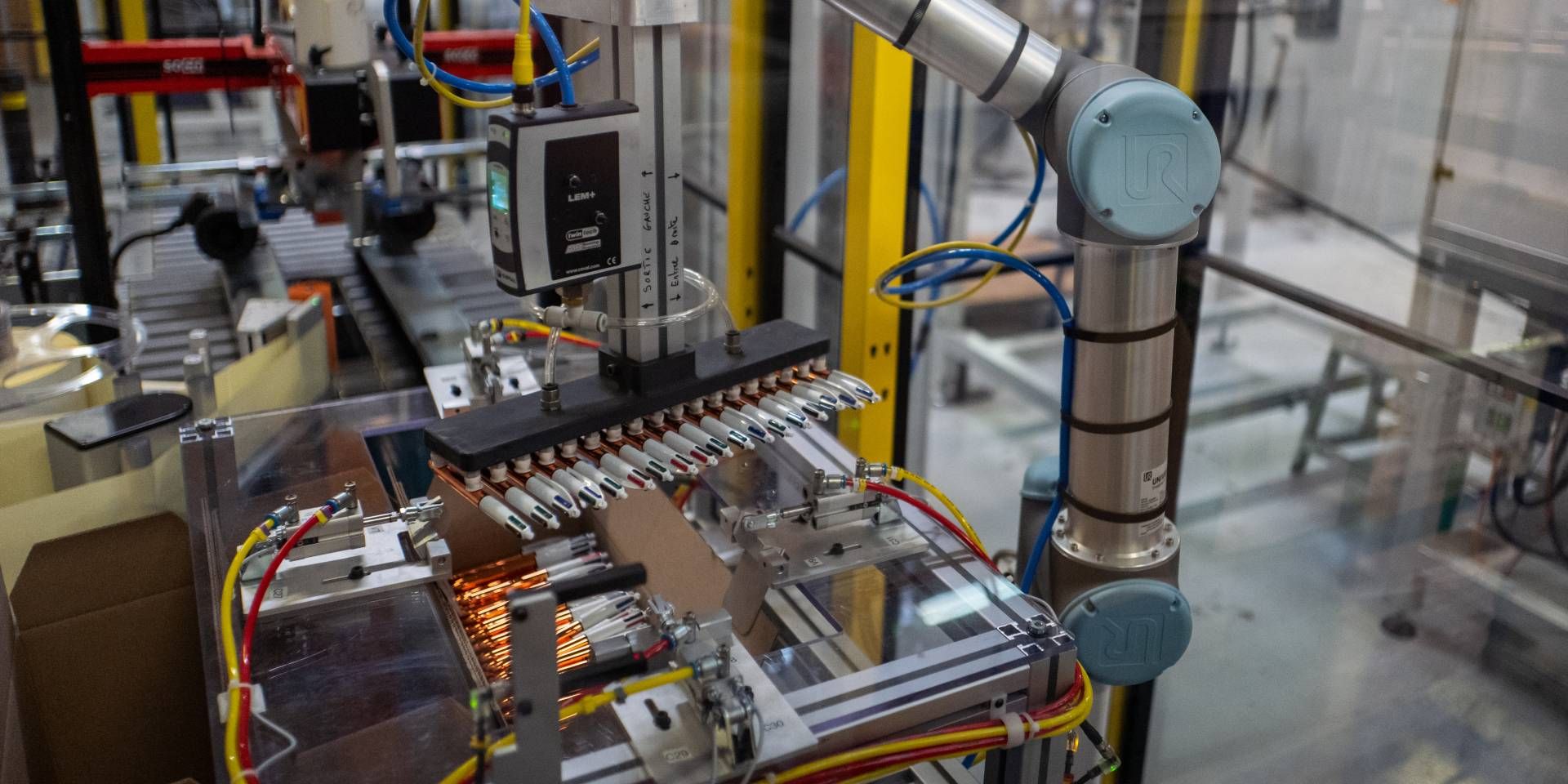
For Bic, it is the same: “These changes reduce costs and optimize cash generation.” By regionalizing its logistics organization, the group manages its supplies better, closer to the actual needs of each plant, and limits its increasingly costly global flows—mainly maritime—in favor of regional flows. “The pandemic crisis, with the enormous pressure it placed on the global supply chain, clearly demonstrated that a local approach is more effective (...) because it makes it possible to organize in a way that enables faster and more flexible responses,” according to an article on Rotom’s website.
The challenge of delegating to “those who know”
However, this requires drawing on a whole range of new providers: new and capable providers, to ensure that regionalization is beneficial rather than simply adding another layer of complexity. “The issue with our providers lies in added value. We will have to ask them to be more proactive. We are therefore studying solutions to manage our transport flows more intelligently, for example by outsourcing control and control tower functions. This indeed involves thinking about make or buy,” explained Manuel Rodriguez, former supply chain and distribution director of the Bic group, at the end of 2022.
The logic is to outsource to “those who know”: firms with a solid presence in their area and a far more thorough knowledge of it than Bic could have from its headquarters. For a company like Bic, accustomed to managing almost everything itself (92% of BIC products are manufactured in Bic plants, according to the 2023 annual report), this is a Copernican revolution.
Digital technology and data to ensure monitoring and retain control
But rest assured: this does not mean the group is relinquishing all control over its business. This new flexibility granted to the regions is fully controlled through the digitalization of processes. Giving autonomy does not mean letting people do just anything, of course. “Digital technology can help us organize flows and monitor containers in transit, for example,” says Vincent Espie, Vice President of Supply Chain at Bic Europe, in an interview with SC Radio TV, before continuing on the virtues of data analytics : “it helps us improve our sales forecasts, which then drive the entire supply chain.”
The result is fewer stockouts and a better service level, meaning plants that operate more efficiently. More generally, “data are crucial to logistics because they make it possible to draw conclusions from the past and provide forecasts for the future,” with the aim of “stabilizing the supply chain by anticipating and avoiding disruptions, and by developing alternative plans to meet schedules,” as stated on Doc Shipper’s website.
A virtuous circle is emerging, helping reduce the carbon footprint
This optimized tracking, a guarantee of greater efficiency, also has another benefit: better supply-chain management directly means less waste, and less waste means lower carbon expenditure. Thus, only the raw materials the company needs move throughout the entire chain, along optimized routes to boot.
At Bic, the environmental footprint has already been considerably reduced: « We have reduced our environmental footprint, from product creation to the end of its life cycle, through a recycling strategy and control of emissions from Bic factories and offices », the group states in its annual report, further detailing: « -19.1% water consumption, -4.7% energy consumption, -2.2% waste generation, -18.1% greenhouse gas emissions (Scope 2), -0.6% greenhouse gas emissions (Scope 3) per ton of production between 2021 and 2022. » This creates a virtuous circle.


