



How logistics is bringing brownfield sites back to life
To contribute to the collective effort to use land more sparingly and to comply with new rules on soil sealing, logistics real estate is increasingly turning to brownfield redevelopment. These projects are often complex and costly, but they give abandoned or underused sites a second economic, social, and environmental life.

First, halve the rate of land take by 2031. Then achieve no net land take (ZAN) by 2050. Officially published in the Official Journal on August 24, 2021, the so-called “Climate and Resilience” law sets ambitious requirements for combating soil sealing. The aim is to put an end to the 20,000 to 30,000 hectares of land being concreted over each year in France. Although logistics activities account for 0.94% of land take in France, the sector wants to do its “small part” in more frugal land use. Among the most promising options is the conversion of brownfield sites previously used for other purposes (industrial, commercial, etc.) into high-performing, attractive logistics areas that create jobs and generate solar energy.
“There has clearly been a deep-seated momentum behind brownfield redevelopment in recent years,” explains Olivier Barge, Chief Operating Officer of APRC Group, CEO of its APRC subsidiary, and one of the leaders of Afilog’s “Environmental Commitments” committee. For a simple reason: 97% of the logistics real estate stock is currently fully occupied, and demand for square footage is not easing. Investors, developers, and even occupiers are now taking a close interest in these types of projects, which address both the scarcity of land and today’s environmental challenges. ”
Outside Marseille, BARJANE redevelops Parc des Aiguilles
The redevelopment of Parc des Aiguilles in Ensuès-la-Redonne (Bouches-du-Rhône) was initiated by the Aix-Marseille-Provence metropolitan authority in 2008. BARJANE—a specialist in logistics and industrial real estate—won the tender to give this ideally located site outside Marseille a second life. It is a major challenge, given the park’s history and scale: 62 hectares, ultimately to accommodate 170,000 m2 of buildings.
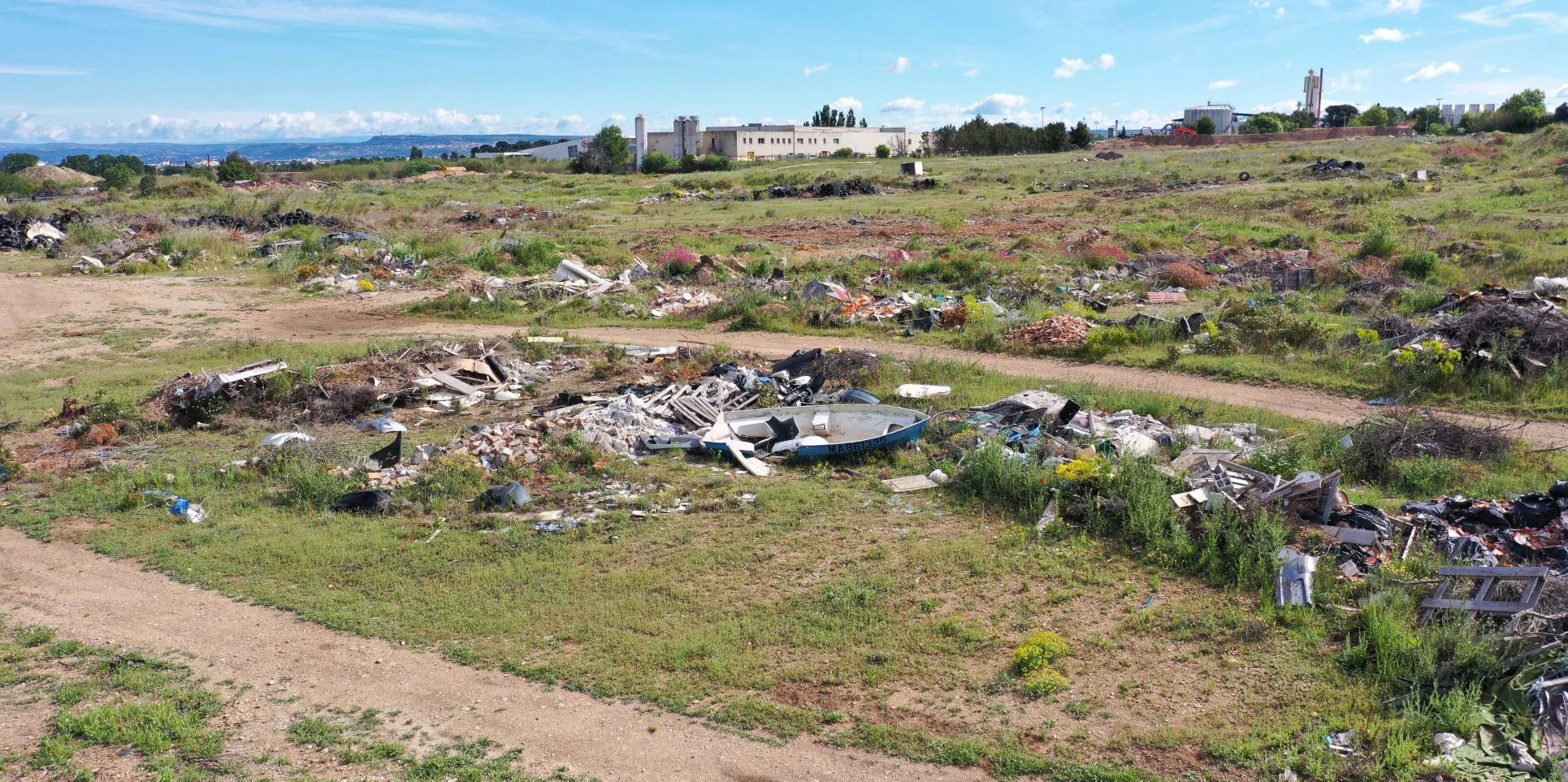
“It is a complex site because it has successively hosted a range of high-impact, highly polluting activities: quarries backfilled with waste, household-waste incinerators, wastewater-sludge treatment activities, illegal dumping of refuse, buried waste, and so on,” says Hasna Berkia-Guez, Quality and Sustainable Development Director at BARJANE. We therefore had to carry out a major site-remediation program before construction could begin: 12,000 m3 of surface waste, 46,000 m3 of buried waste, 8,000 m3 of asbestos-containing waste, more than 5,000 m3 of concentrated hydrocarbon, PCB, and arsenic contamination, etc. We also received support from ADEME’s brownfield fund to carry out this treatment.” With the first phase of infrastructure work complete (the entry roundabout, access road, burial of the high-voltage line, raw-water supply, etc.), the project is now entering a new phase with construction of the program’s first two buildings for Decathlon and Action. “It is a highly stimulating project because it shows that redevelopment can bring to life logistics projects that are both exemplary environmentally and attractive economically. ”
The infrastructure, remediation, and building work has involved more than 250 people, prioritizing local employment and workforce integration. The first two buildings are expected to create or sustain 600 jobs in the long term. Parc des Aiguilles as a whole will host more than 1,000 jobs. Solar power will also be generated on site: BARJANE was selected as a winner of the CRE 4.13 call for tenders for the development of the park’s first two solar power plants, with a combined capacity of 6.1 MWp. Ultimately, the site will host around 10 MWp, equivalent to the annual electricity consumption of approximately 6,500 people.
Former L’Oréal site in Marly-la-Ville transformed by Prologis
Some 800 kilometers farther north, another project illustrates this redevelopment momentum in the logistics real estate sector. It is the former L’Oréal site in Marly-la-Ville (Val-d’Oise), acquired by Prologis in 2014. It became the new logistics platform for electronics distributor Exertis in June 2019 and for clothing brand SMCP in 2020. This storage site was classified as an ICPE facility because it housed environmentally sensitive products. L’Oréal left in May 2014 to relocate to Vémars (Val-d’Oise), to a new site offered by Prologis that enabled it to optimize its supply chain. As part of this move, the owner remediated and dismantled the site, giving it a new life. The work was carried out in a circular-economy approach: all concrete from the former site was crushed on site and reused in new construction. A dedicated stream was also set up to recycle metal components. The project also offers environmental benefits through restoring part of the site to open ground and filtering 100% of rainwater on the plot, in line with the principle of hydraulic neutrality, thereby limiting flood risk and treatment needs. The building received the highest level of the BiodiverCity label awarded by the International Council for Biodiversity and Real Estate (CIBI), with an AAAB rating, becoming the first logistics development to attain the Excellent level.
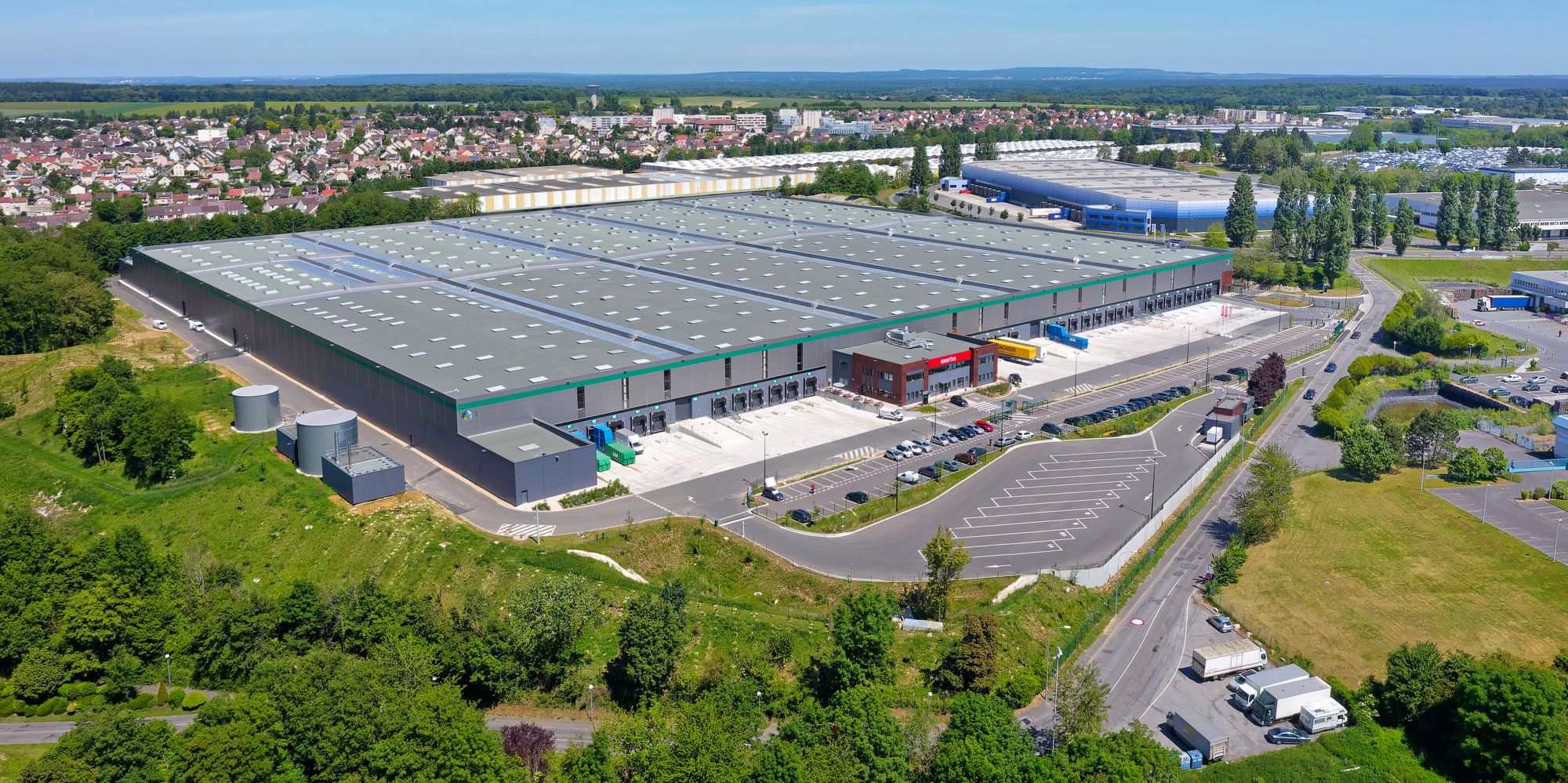
Today, Exertis and SMCP have a 60,000 m² logistics platform, divided into 10 units and offering an internal storage height of nearly 12 m (20% higher than the market standard). This increases operational density and reduces the building footprint for equivalent goods flows, while retaining the same external height. It provides year-round employment for nearly 200 staff members.
A former Seita factory redeveloped by Idec for Lidl in Carquefou
Farther west, Lidl inaugurated a new platform in March on the site of a former Seita factory in Carquefou, an emblematic example of the group’s commitment to sustainable development. It therefore aligns directly with the Afilog charter and its commitments to stringent environmental standards. “It is a very particular site, because this brownfield site was home to the largest population of gulls in France—nearly 150 birds. To avoid disrupting their ecosystem, we found compensatory measures to relocate them, with ongoing monitoring by a specialist for years to track their development,” explains Étienne Pataille, Director of Major Real Estate Projects at Lidl France.
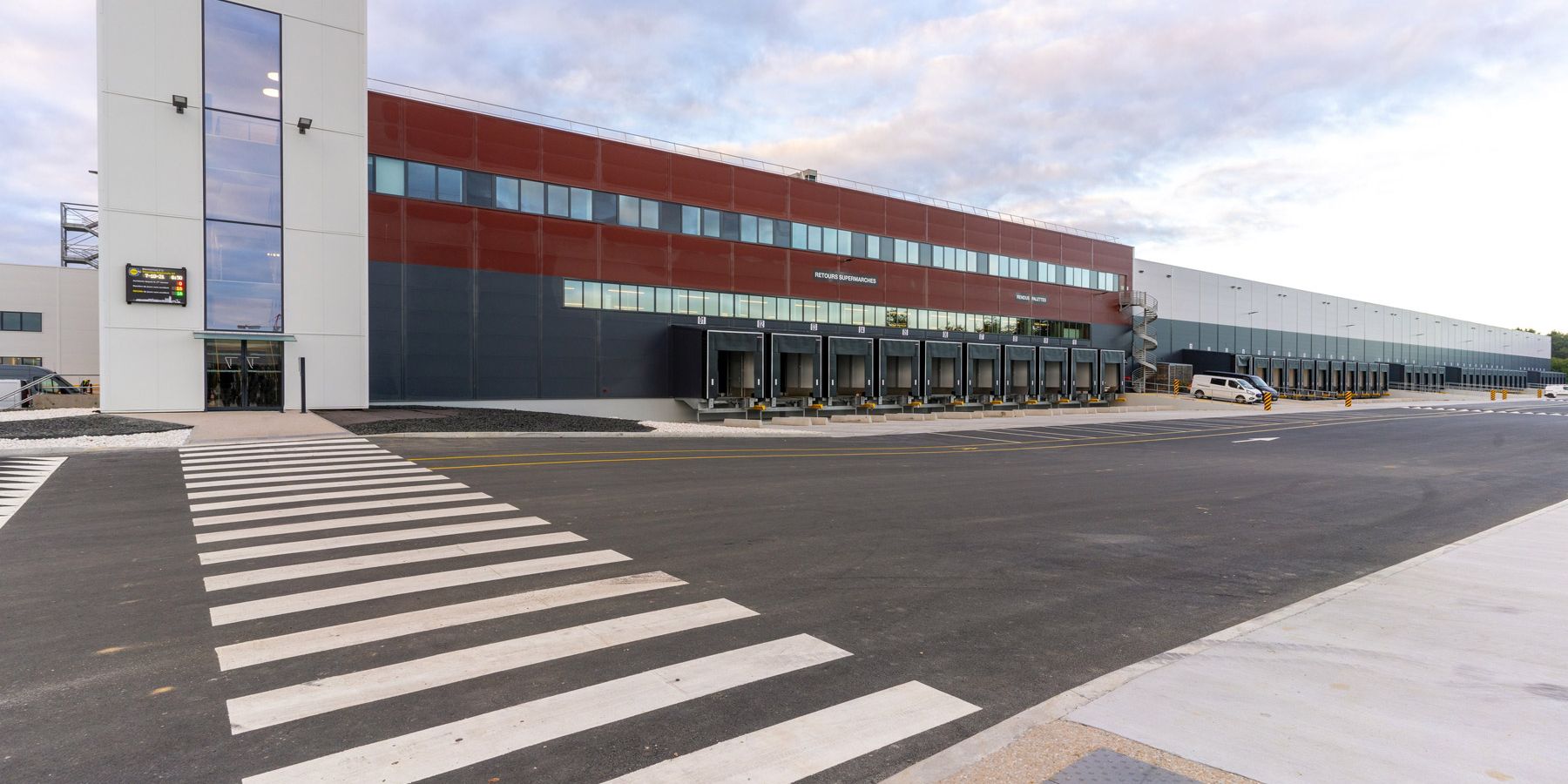
This extensive work was made possible by IDEC, which built the new platform, as well as through consultation with DREAL and government authorities, which supported Lidl in identifying the right measures to take. And, of course, by the ecologists who worked continuously on all these issues. The consultation among all these stakeholders made it possible to redevelop this brownfield site without disturbing the gulls and to find a place where they could settle permanently without being endangered.
Logistics real estate professionals mobilize around brownfield sites
The examples of Ensuès-la-Redonne, Marly-la-Ville, and Carquefou show that redeveloping brownfield sites into logistics facilities is not only possible everywhere, but can also give rise to projects with high economic and environmental value. As the sector’s facilitator, Afilog now shares these best practices within its membership network. “There is a working group at Afilog monitoring the State–Afilog charter of mutual commitments for the environmental and economic dual performance of logistics real estate, explains Olivier Barge. At our meetings, we discuss land-use frugality and the redevelopment of industrial brownfields, among other topics. We do not keep our work to ourselves on these matters. On the contrary, we share our experience and advice to enable our sector to be a pioneer in this field. ”
Site-remediation techniques, circular economy, contractual matters: the association’s members have no shortage of topics to discuss. There are even several emerging issues, such as preserving the memory between a site’s two lives. “For example, we led the redevelopment of the former brickworks in Ollainville, Essonne. It was a site steeped in history. The brickworks even appeared on the town’s emblem. We therefore decided to incorporate bricks into our architectural design,” says Hasna Berkia-Guez. The heritage dimension should play an increasingly prominent role in future redevelopment projects. It will be about linking the past and future of rebuilt sites. ” There is no doubt: for logistics real estate, the future lies in brownfields.


