



The logistics hemisphere of Réunion Island
Réunion Island, like all islands, is highly dependent on imports, with €6.2 billion in imported goods in 2021 (INSEE figures) to support its population of 860,000 and develop the local economy. Supply needs, inadequate infrastructure and a strategic location for South-South trade place logistics at the heart of regional planning and development strategies.

Réunion Island cannot afford to miss the opportunity to manage flows of goods (transport, storage, etc.). For businesses and residents alike, the sector is the main gateway for products entering the territory and has a direct impact on costs. “Poor logistics inevitably leads to price inflation,” explains Jean-Christophe Courné-Noléo, president of the ALSEI Group, which develops logistics infrastructure on the island. “For example, a yogurt costs between 30% and 100% more than in mainland France. So making it easier for food-sector players, among others (as this also concerns medicines and essential goods), to move their products is beneficial to the purchasing power of Réunion residents.” Moreover, Réunion must keep at least one month of reserve stock (the port of Marseille being three weeks away by sea and Le Havre one month away). “If we cannot store goods, we run out of products and that creates riots; it is part of the cyclone culture. In the event of a major weather event, residents stock up because they cannot leave their homes for a week. Logistics capacity needs to be increased tenfold,” says Jacques Tanguy, a native of the island and president of the OPALE-ALSEI Group.
Réunion Island is catching up in logistics
“The island’s shortfall in logistics infrastructure is colossal,” insists Jacques Tanguy. When the company became interested in the territory, almost no warehouse space was available and prices were nearly three times higher than in the Paris region, by way of comparison. Prices were far higher and, above all, disconnected from the buildings’ real value; there were too few of them, and most did not meet standards or requirements. For Emmanuel Séraphin, mayor of Saint-Paul and president of the Territoire Côte Ouest intermunicipal authority, “there is a shortfall of around 180,000 square meters of warehouse space, which the intermunicipal authority intends to make up through a proactive development policy launched in 2009.”
Yet Réunion has one of France’s leading ports, with more than 6 million metric tons of freight handled in 2021, according to figures provided by Grand Port Maritime, which manages the infrastructure. “The problem is that a port without a logistics zone does not work!” observes Jean-Christophe Courné-Noléo. “Most warehouses are too small, at around 1,000 square meters, with no handling area and ceiling heights that do not allow storage to be optimized. As we say here, they are ‘tin-roofed shacks,’” Jacques Tanguy sums up.
Building the right infrastructure
“One of the difficulties lies in the cost of building warehouses on an island territory. Structural frames are imported, and cyclone standards also impose certain constraints... For example, the amount of foundation concrete for a column is usually one cubic meter, compared with nine cubic meters on Réunion Island,” details Jacques Tanguy. “We are currently working to reinforce the dikes to protect the areas to be developed along the western coast,” adds Emmanuel Séraphin. One advantage, however, is that even before construction begins, almost all buildings have already been leased, the two OPALE-ALSEI Group experts say.
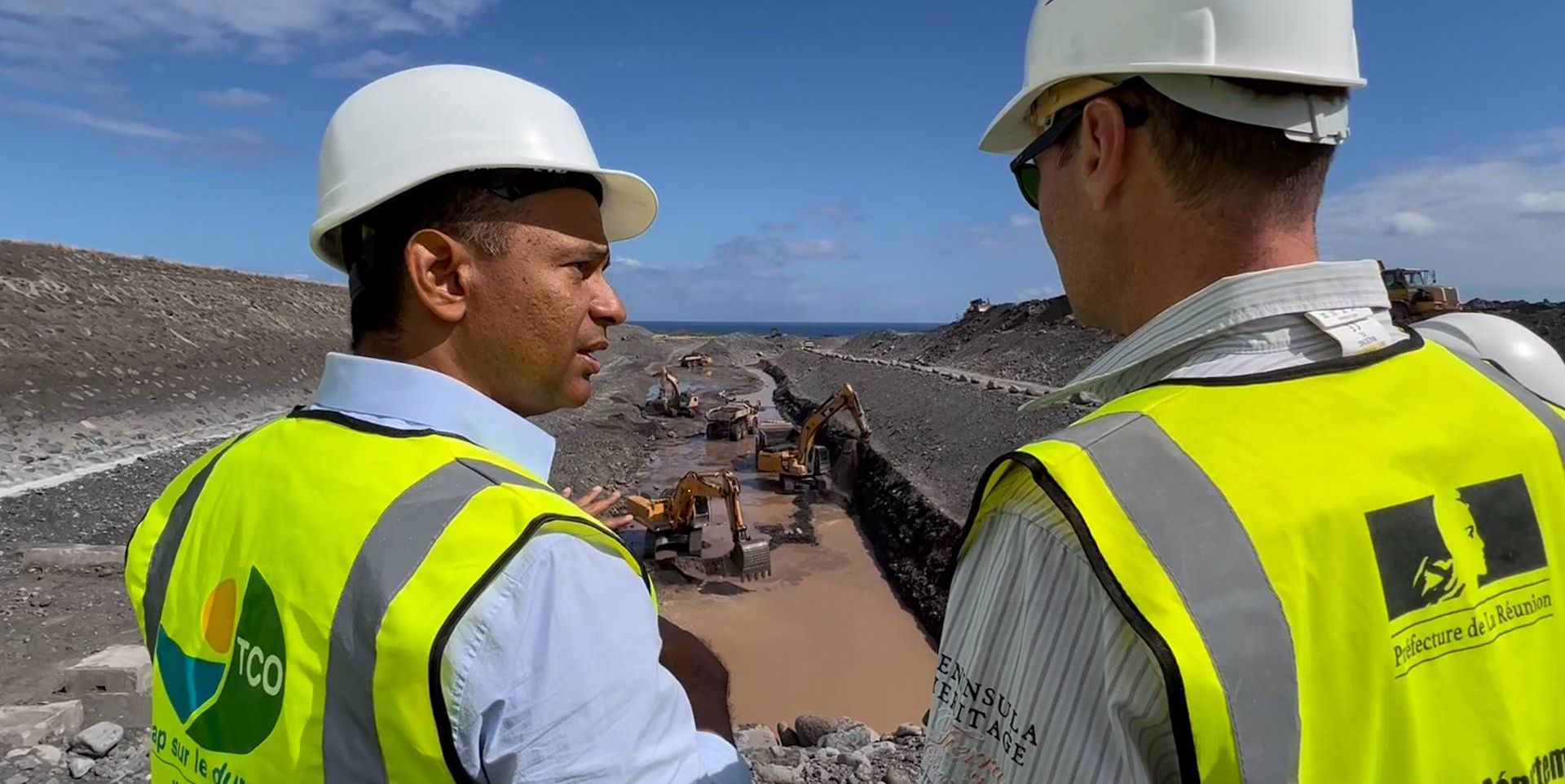
To encourage infrastructure development while limiting land take and preserving natural areas, Territoire Côte Ouest works hand in hand with developer-investors to build new warehouses. “We are seeking to develop 80 hectares of logistics space behind the port, and 300 hectares are to be developed between Le Port and the city of Saint-Paul, creating a link between these two hubs in the west of the island. This will enable new activities to develop while freeing up land as close as possible to the port for logistics warehouses.”
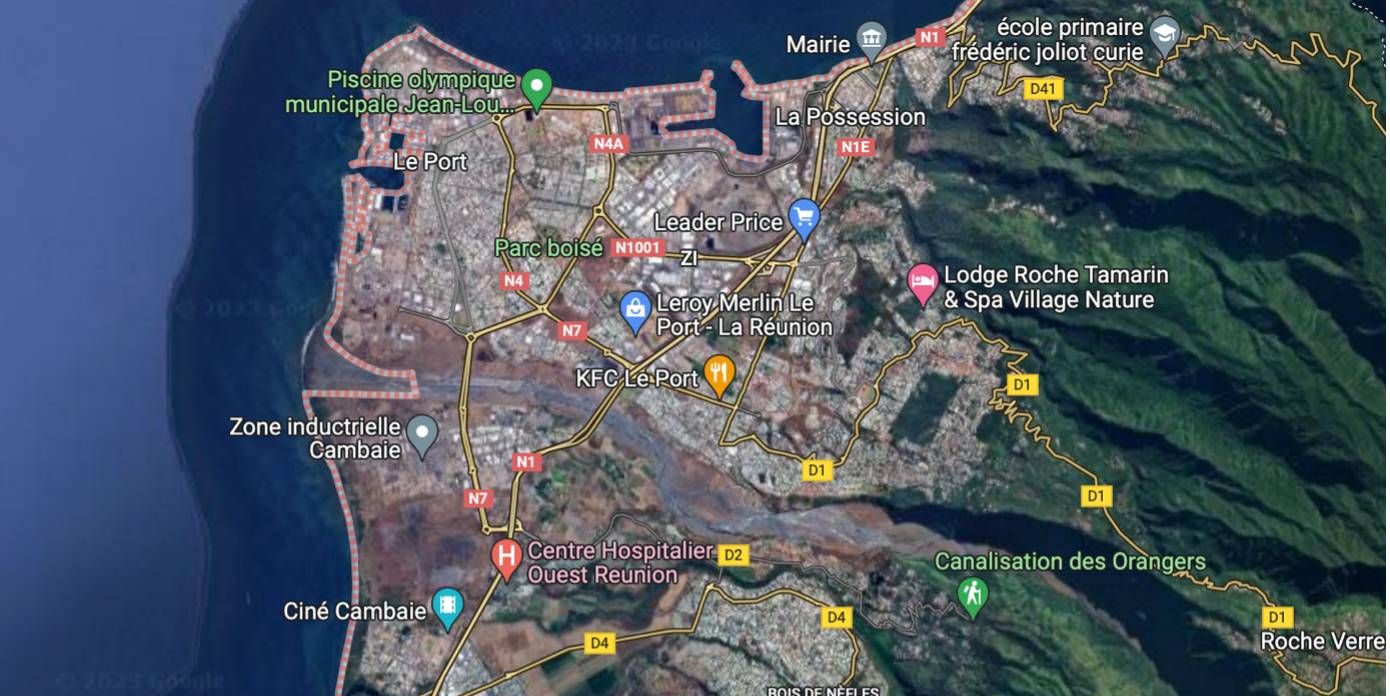
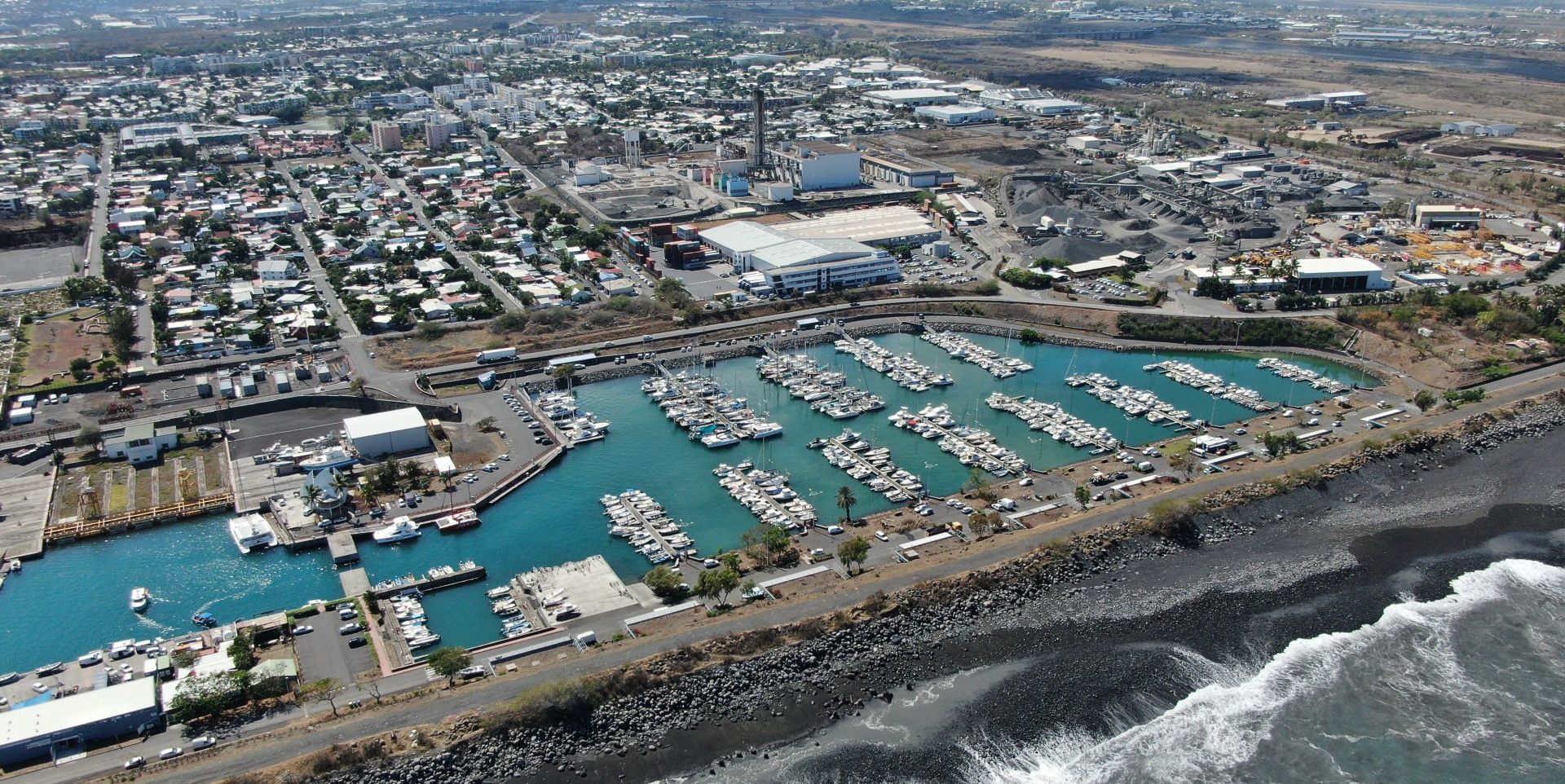
Warehouses must be built, certainly, but not without an overall vision for the territory, since one challenge is to contribute to the lasting modernization of all infrastructure: from unloading docks to consumption centers, including roads and intermediate storage facilities. Transport is a key issue. “Mobility challenges are significant: for a logistics operator or a mass-market retailer, being stuck in traffic jams is costly. For the time being, transfers between the small warehouses in Territoire Côte Ouest involve considerable travel. That is why we take mobility as a whole into account in our development strategy, creating more residential areas close to these industrial and logistics spaces to house workers who, in the future, will be able to cycle to work, for example,” explains Emmanuel Séraphin. “By enabling modern logistics facilities to be developed at the port, we are creating a major, diversified hub, since the territory has a cargo port, a marina, a military port and a fishing port.” The concepts of “living, working and consuming” are therefore directly incorporated into the infrastructure development strategy.
Positioning Réunion Island at the heart of South-South trade
Located off Africa’s east coast and in the middle of the Indian Ocean, Réunion Island is naturally positioned as a gateway to Africa and for trade with Asian countries. “The port can truly become a hub between Asia and East Africa and establish itself as a major crossroads for rapidly growing South-South trade,” Emmanuel Séraphin says. “When the Suez Canal was blocked, the number of ships passing offshore surged.” While its geographical distance from mainland France can sometimes be a disadvantage for the island, its southern anchoring is clearly a major asset for the country and for French and European logistics players, who find in Réunion Island Europe’s financial and social stability.
So what does Réunion Island still need to further strengthen its standing as a logistics “major player”? While infrastructure is booming thanks to the efforts of public and private developers, strategic, essential partnerships still need to be built between Southern Hemisphere territories and maritime freight players. “The overseas territories are still too dependent on the goodwill of shipping companies,” says Emmanuel Séraphin. “Shipping companies call at major African ports, which is why we are working on the prospect of a regional shipping line, in conjunction with the major companies, to meet businesses’ needs in this international arena.” Réunion Island has no shortage of resources: economic, agricultural, fisheries, tourism—and now logistics resources too!


