Native plants, hedgerows, rock piles… Warehouses rally for biodiversity
In July 2021, Afilog members signed a charter of mutual commitments with the French government to enhance the environmental and economic performance of French logistics real estate. It includes six requirements covering stormwater, biodiversity and access to brownfield sites, among other issues. The event formalized the commitment of warehouse owners and managers to these issues over several years. Analysis.

“Over the past three years, we have clearly seen logistics professionals become more aware of biodiversity issues. This is reflected, for example, in the presence of landscape architects and ecologists on the teams designing and delivering logistics-building construction projects.” As Ecology and Landscape Project Manager at Payet, Alice Delude is both an observer and an advocate of this shift in mindset within the logistics sector. Beyond the charter signed last summer, many recent initiatives by major industry players indeed appear to demonstrate a genuine willingness to act on environmental policy, and more specifically to support biodiversity. These include the partnership—announced in February 2021—between Prologis and Beeodiversity, which launched a continuous-improvement approach to biodiversity and reducing environmental impacts for France’s leading logistics real estate company. Another example is the “company committed to nature” distinction awarded to investor and asset manager Barjane by the French Biodiversity Office for its biodiversity-awareness and protection efforts across its extensive green spaces
Native plant species, hedgerows and wildlife shelters
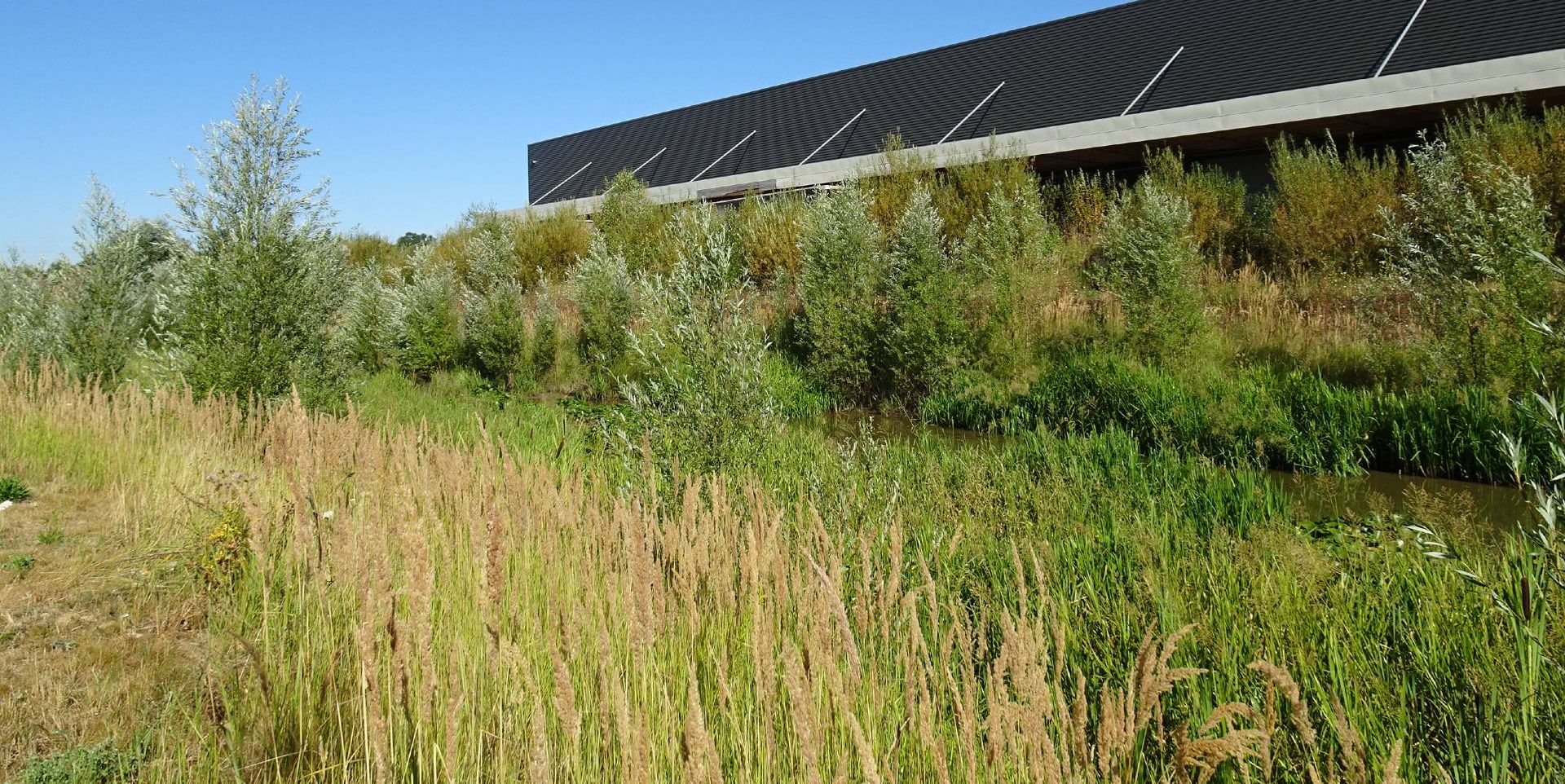
On the ground, this willingness to act among logistics real estate professionals is first evident in a new approach to green spaces and planting. Until a few years ago, warehouse managers and owners favored exotic species whose evergreen foliage could dress up the site. Today, native species are favored in order to support local biodiversity. Landscaped areas are now developed in continuity with local landscapes, notably through the planting of hedgerows in agricultural settings—an objective supported by the charter of mutual commitments signed in July 2021.
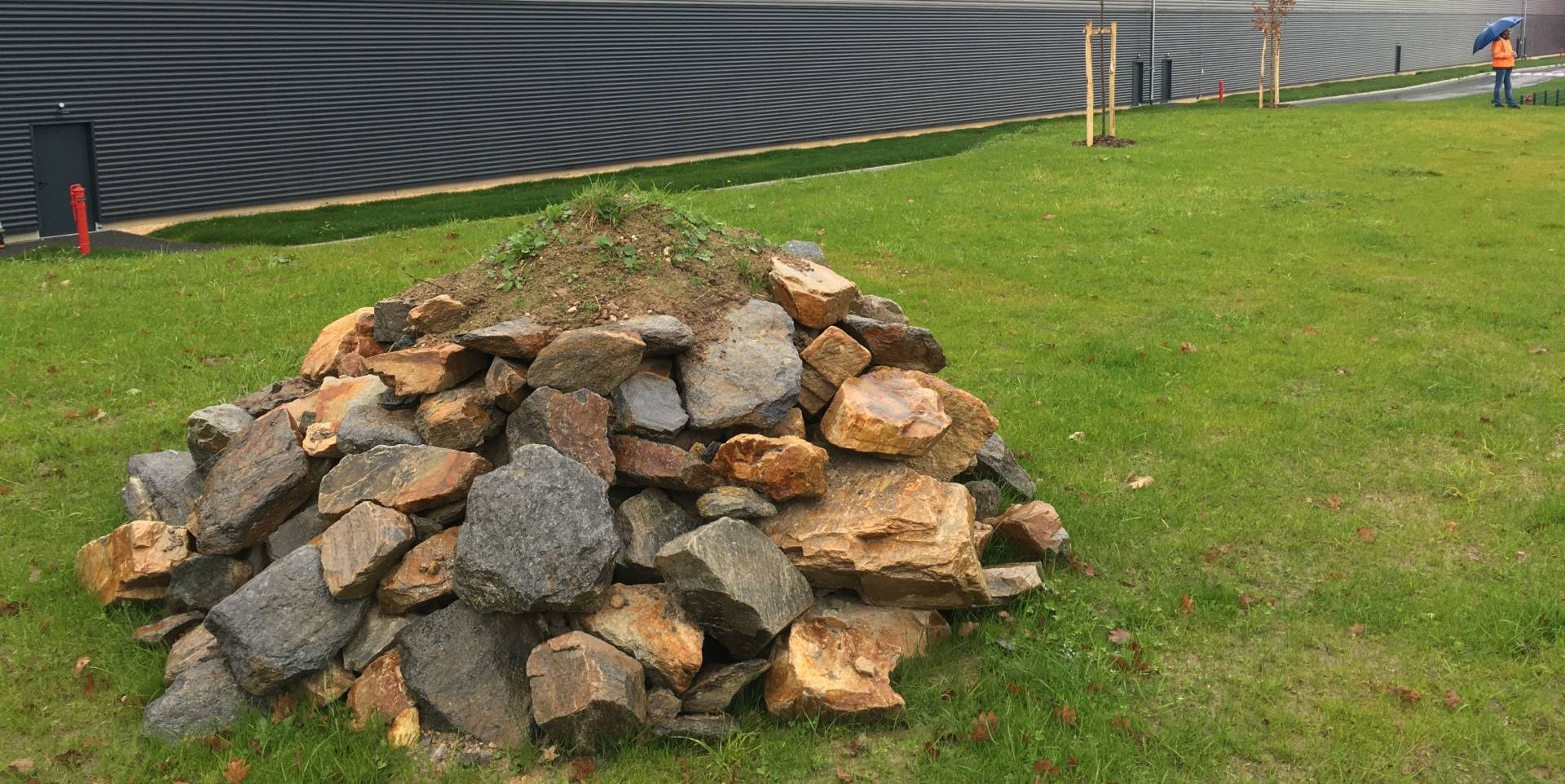
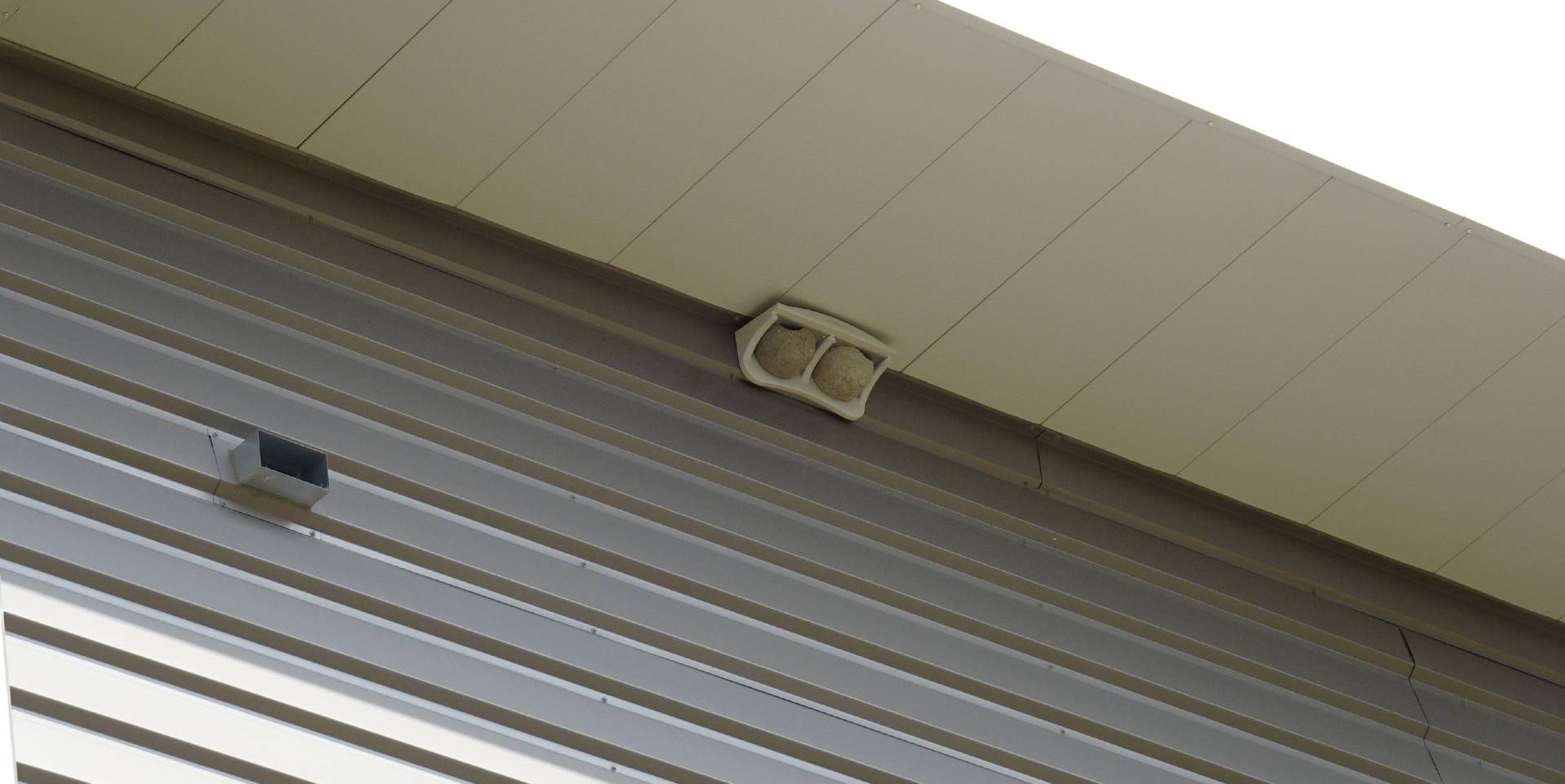
Another area for improvement identified by Alice Delude is the installation of features that make logistics sites more welcoming to wildlife, within landscaped areas as well as on roofs and facades. “Rock piles are piles of stones that enable lizards to regulate their temperature. This concept can be adapted according to the site, the region and local species. In some regions, hibernacula offer a similar principle, but with a cavity created and branches added to allow snakes to overwinter.” It should be noted that these shelters also benefit flying species through initiatives such as wild-bee totems, bird nesting boxes and bat roosts.
Encouraging action to protect biodiversity near warehouses
While professionals are now broadly mobilized, the sector as a whole still needs to make progress on certain key biodiversity-protection issues. This includes incorporating ever more green space into tomorrow’s logistics projects. “Some obstacles remain among project owners, investors and builders. They are constrained by the requirements imposed by future occupants, who generally want the greatest possible built area, leaving little room for green space. This is now rare, but we still see projects that set aside only 10% of the entire site for green space. That leaves little room for biodiversity,” says Alice Delude. On the other hand, this greater building density reinforces the land-use efficiency that warehouses are encouraged to support by using less land.
Lastly, combating light pollution will likely be the other major future biodiversity issue in logistics real estate. For reasons of security and visibility, warehouses are still often extensively lit. These light sources disrupt insects, bats and migratory birds. To address this, future logistics real estate projects will need to incorporate lighting studies before construction. The aim is to achieve better integration of lighting into new sites (fewer lighting points, downward-facing fixtures, no lighting in green spaces, etc.). Still relatively pioneering, this approach is now engaging a growing number of investors, project owners and engineering consultancies. All stakeholders, all mobilized for biodiversity.