



Circular construction sites for logistics warehouses: a practice already under way
Recovering demolition waste as a resource—more than 42 million tonnes of which are generated every year by the construction industry—helps reduce the carbon footprint of logistics warehouse construction sites. Spotlight on two projects in Vitrolles (13) and Corbas (69).

The question was no longer whether this would happen, but when. The logistics sector, the king of flow optimization, is taking up the challenge of the circular economy on its construction sites. The gradual implementation by the Ministry for Ecological Transition of the extended producer responsibility (EPR) scheme aims to offer construction-industry players solutions for recovering construction products and materials when a building is demolished: collection points throughout the country, waste recycling and recovery operators, and eco-organizations for certain specific sectors. This rollout is set to take shape in the coming years, but some logistics players have already taken the lead.
In Vitrolles, an ultra-modern freight terminal that recovered 90% of demolition waste
This is the case in Vitrolles, in the Bouches-du-Rhône department, where developer GEMFI, which specializes in the design and construction of industrial buildings and business parks, deconstructed an industrial brownfield site to rebuild a multi-phase development of buildings dedicated to urban distribution, ultimately covering a total area of 20,000 square meters. The first phase—an ultra-modern 5,500 m² freight terminal—was handed over to its user in the third quarter of 2021. Laurent Horbette, CEO of GEMFI (the development and promotion arm of GICRAM Groupe), explains how the project came together: “We partnered with SEGRO, the investor-owner in this project, whose potential we had identified as early as 2017 and for which we are the designer and builder. In practical terms, this involves revitalizing a brownfield site of around ten hectares, first by demolishing an old, obsolete warehouse covering approximately 25,000 m², then by building a new high-service freight terminal, reusing as much material as possible from the former building.”
This delivers several benefits. First, it helps combat soil sealing, a major challenge for the logistics sector—although Laurent Horbette points out that 95% of this phenomenon in France results from the development of single-family housing. “This constraint to seal as little land as possible is positive: if sites are very well located and lightly contaminated, it makes sense to rebuild on obsolete properties.” The impact is both economic and environmental, avoiding the cost of removing waste—and just as many truck trips to bring rubble and materials to the site. “The existing building was mainly made of concrete and metal; we were able to reuse more than 95% of the concrete, thanks to sorting carried out on site by the company responsible for the deconstruction. We recovered different material streams, mainly crushed concrete in several aggregate sizes, to produce sand suitable for reuse as a sub-base, both for the platforms of the new buildings to be constructed and for all the project’s site utilities.”
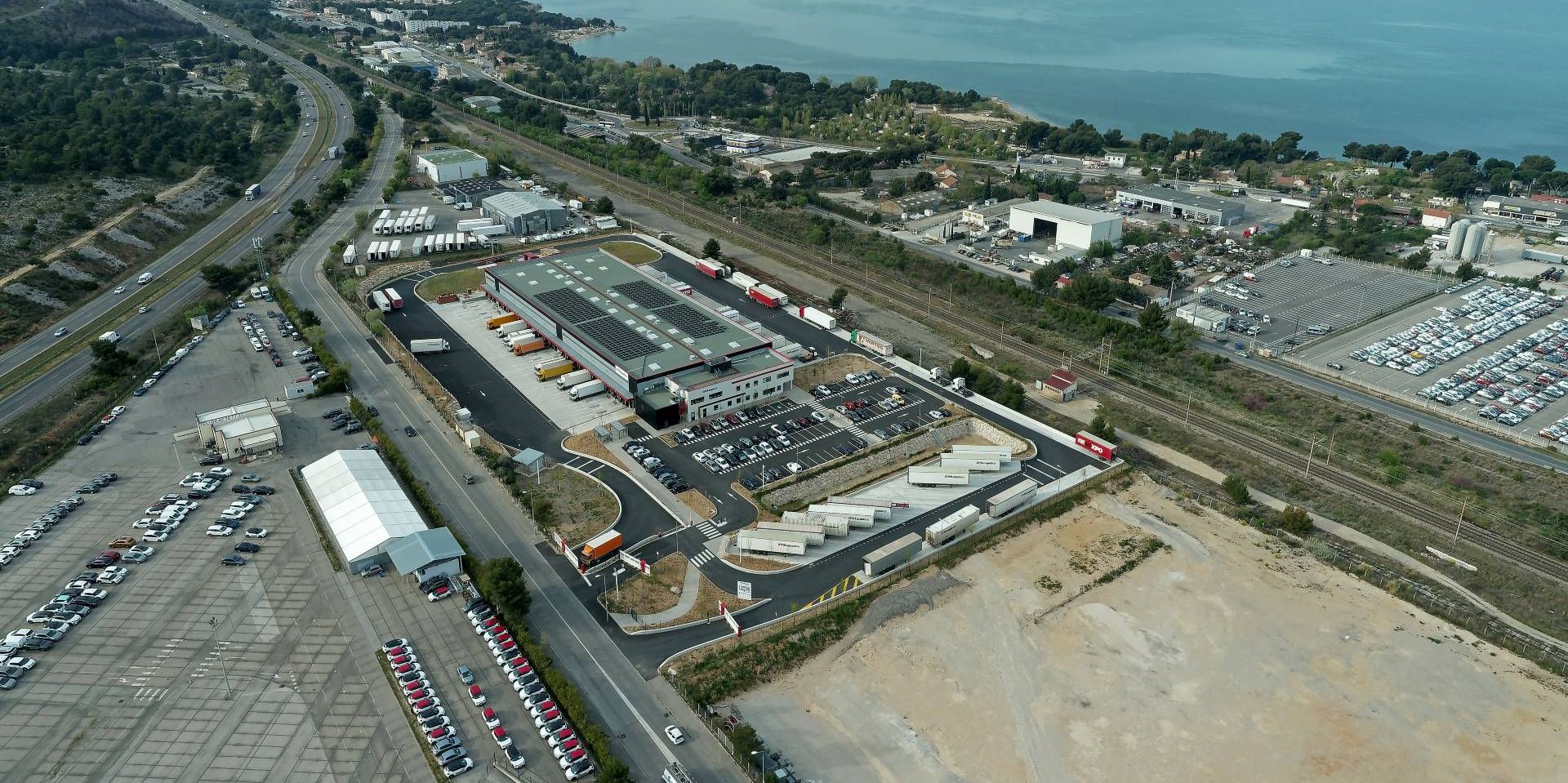
A long-term investor, SEGRO is a real estate company specializing in logistics platforms, urban distribution and business parks that is increasingly selecting projects in which the circular economy is incorporated upstream of construction. For good reason: Laurence Giard, Managing Director of SEGRO France, notes that “the life-cycle assessment of a construction site of this type shows that producing construction materials accounts for 75% of greenhouse gas emissions. Reuse therefore enables us to drastically limit our carbon impact and create a virtuous cycle ,” and the project has received BREEAM environmental certification.
Building upward and on existing sites to reduce soil sealing
Three hundred kilometers farther north, in Corbas, in the inner suburbs of Lyon (69), SEGRO has invested in the first multi-story freight terminal in the heart of an urban area, scheduled for delivery at the end of 2022. This project, financed through an off-plan sale (VEFA), is being developed by DCB Logistics, “a pure-play developer in logistics and freight terminals” according to its CEO Laurent Séven. Here too, the aim is to adapt to the scarcity of available land by redeveloping brownfield sites, benefiting from prime locations and optimizing land that has already been sealed, in particular through multi-story construction, which helps limit the footprint.
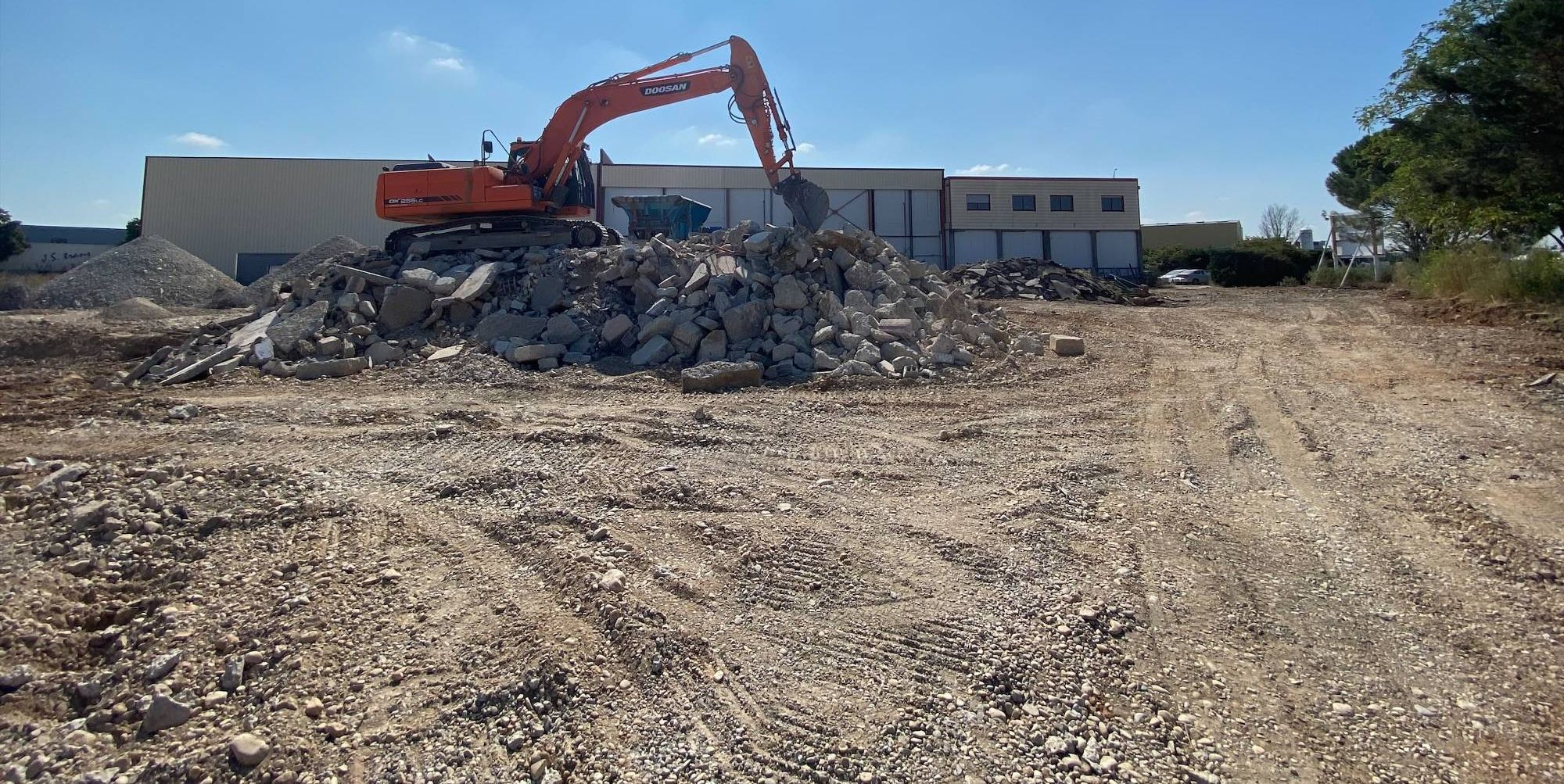
For SEGRO, the circular economy around the construction site was one of the factors that supported the acquisition of the future freight terminal, Laurence Giard emphasizes: “The deconstruction and reuse of materials on site are important factors in our investment decisions. We aim to reuse 80 to 90% of materials.” The carbon footprint of a construction site with no particular recycling effort is generally around 800 to 1,000 kg CO2 equivalent/m². SEGRO’s objective is to move toward 400 kg CO2e/m² through a circular-economy approach and, in particular, the reuse of materials. Laurent Séven explains the approach undertaken in Corbas: “We recycled more than 90% of demolition waste. The vast majority of recycled materials were reused on our own construction site, except for the cladding, which was in poor condition. The concrete aggregates were used to restore the ground for the base of the platform.”
Circular logistics: a strategic pillar of social responsibility
The project’s outcome is positive from an environmental standpoint—with the freight terminal receiving BREEAM Very Good certification—and neutral in terms of financial impact. For Laurent Séven, the satisfaction lies elsewhere: “At DCB Logistics, we take pride in carrying out this type of construction project, both for the environment and for the quality of working conditions of future users.”
SEGRO is a signatory to the State-Afilog charter of mutual commitments for the environmental and economic performance of logistics real estate, and the group has ambitious CSR strategy goals: “We pursue a highly quantified policy, with indicators highlighted in LCAs (life-cycle assessments) over the entire lifetime of our buildings, as well as systematic carbon assessments. Laurence Giard adds: We work on issues such as combating soil impermeabilization, generating renewable energy through photovoltaic roofs, greening spaces, taking biodiversity into account, and workplace well-being for the users of our buildings.” From recovering materials through the circular economy to enhancing future workspaces, the virtuous circle is complete.


