



How new technologies are revolutionizing working conditions in warehouses
Logistics sometimes suffers from a negative image when it comes to working conditions, but the sector is modernizing and now relies on cutting-edge technologies to improve employees’ day-to-day lives, tackling arduous work and relieving them of low-value-added tasks. An investigation into these solutions in warehouses.

100,000. That is the number of hiring plans recorded by Pôle emploi in 2021 in transportation and warehousing, highlighting the sector’s recruitment challenges. “Arduous work” and “the repetitive nature of tasks” are often the first descriptors associated with these jobs—a justified criticism in light of what they were like only a few years ago. Since then, the sector has been radically transformed to reduce the risk of accidents and the arduousness of tasks while improving productivity.
Technologies that improve warehouse working conditions
In logistics warehouses, manual handling accounts for 50% of workplace accidents, 75% of cases of medical unfitness for work, and 100% of recognized occupational diseases, according to a study by INRS (the French National Research and Safety Institute). Replacing manual handling with robotic handling can therefore reduce the risk of injury and even more serious incidents. A growing number of companies in the sector, including logistics providers and major retailers, are betting on robotization. This is demonstrated by the success of French unicorn Exotec, which specializes in designing and manufacturing robots for logistics supply chains. “At Exotec, we are experiencing very strong growth, in the region of +100% to +200% every year,” reveals Thomas Genestar, the company’s managing director for Western Europe.
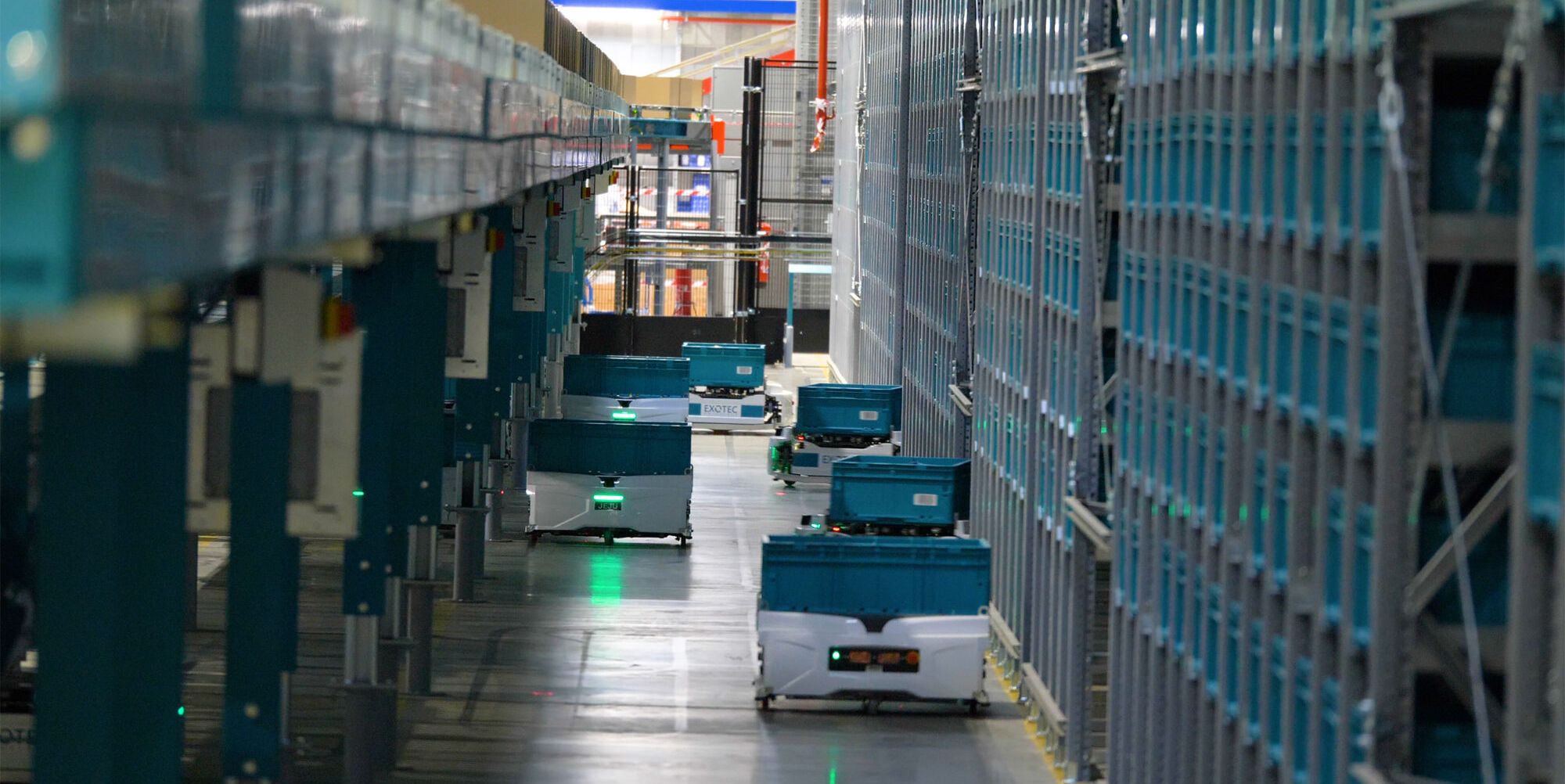
What do these solutions actually look like? “We are talking about robots that can retrieve bins from up to 12 meters high, stations that make order picking easier for operators, automated arms, warehouse management software,” Thomas Genestar explains. Based in Lille, Exotec also exports its expertise to Europe, the United States, Canada, and Japan.
· 10 to 15 km per day: the distance covered by order pickers
· 1 to 10 metric tons per day: the weight carried by material handlers
“Automation and robotization make it possible to relieve operators of the most arduous tasks. Their role is more focused on planning, preparing, and checking orders, with products arriving at the right height and in the right conditions,” explains Thomas Genestar. “To achieve optimal results in terms of workplace comfort, we have carried out research and development work with ergonomists, among others.” But what impact will automation have on wages and employment in the logistics sector? The question naturally arises whenever robots are discussed.
More productivity, but no fewer jobs as a result
As early as the beginning of the 19th century, economist Ricardo envisioned machines replacing humans. For Etienne Webre, director of development at EVOLIS, a trade organization for capital goods and industrial solutions, “robots do not eliminate jobs; they create more highly skilled jobs.” In a 2017 study conducted by EVOLIS among around 100 industrial SMEs, 65% of companies said they had hired between one and five employees after integrating a robotic cell. Indeed, machines are supervised by operators responsible for their programming, checks, maintenance, and more—not to mention all the situations in which people are irreplaceable for specific orders not programmed into the robots’ reference system.
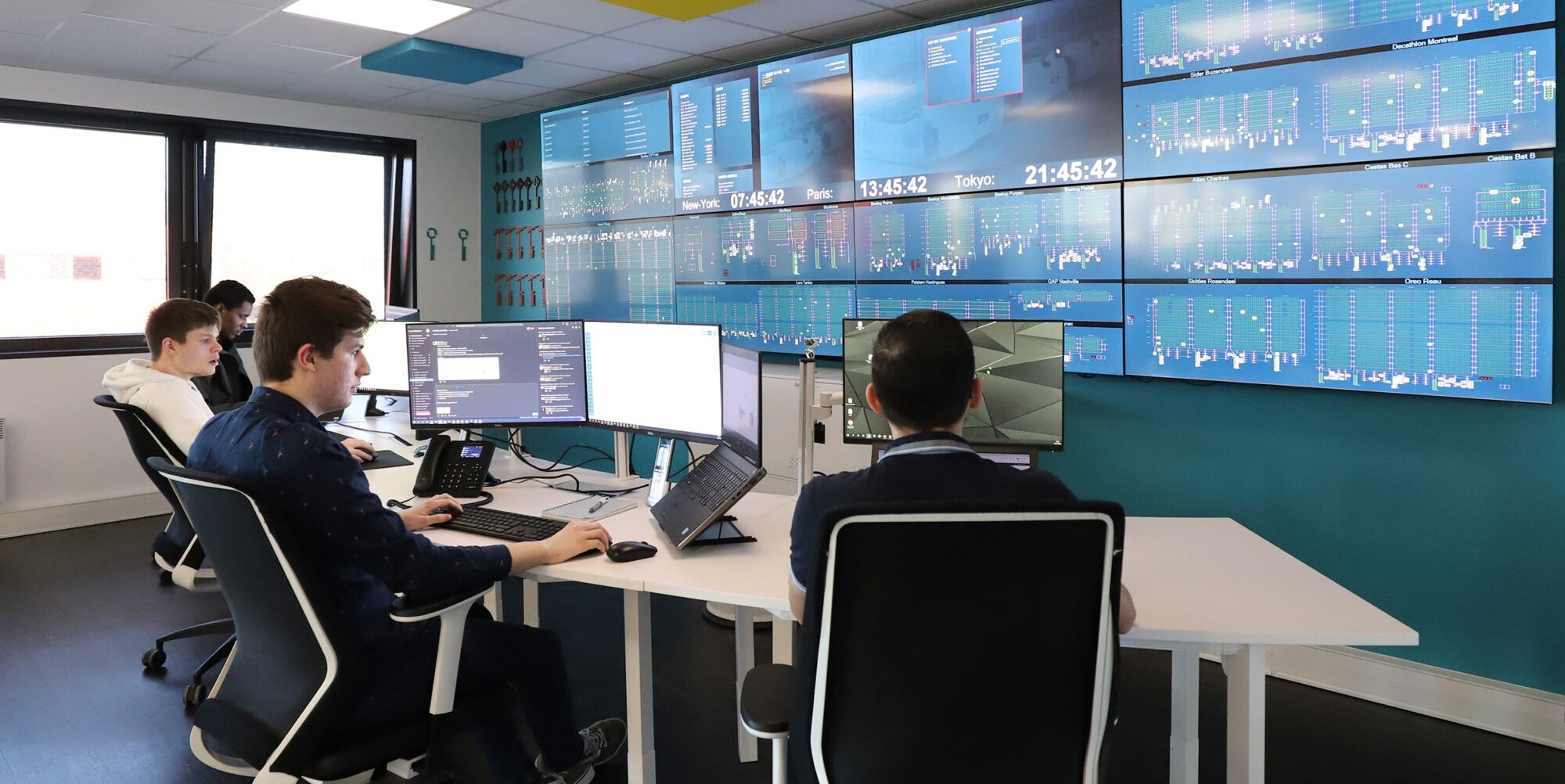
“Most of the time, robots are installed in companies experiencing strong growth, where operators are redeployed to higher-value-added tasks,” adds Thomas Genestar. The growth of e-commerce has made a major contribution to increasing logistics needs, but that is not the only reason, according to Etienne Webre, because “there is a very strong desire to bring manufacturing closer to logistics warehouses in order to reduce transportation and real estate costs.” These new technologies also make it possible to create denser warehouses by making use of height and optimizing floor space through equipment that operates not only in 2D, but in 3D.
Eliminating the most arduous tasks, improving productivity, enhancing the value of logistics jobs, and optimizing space: a new industrial revolution is clearly underway in the logistics sector thanks to new technologies.


