



Logistics: Essential for Label Emmaüs
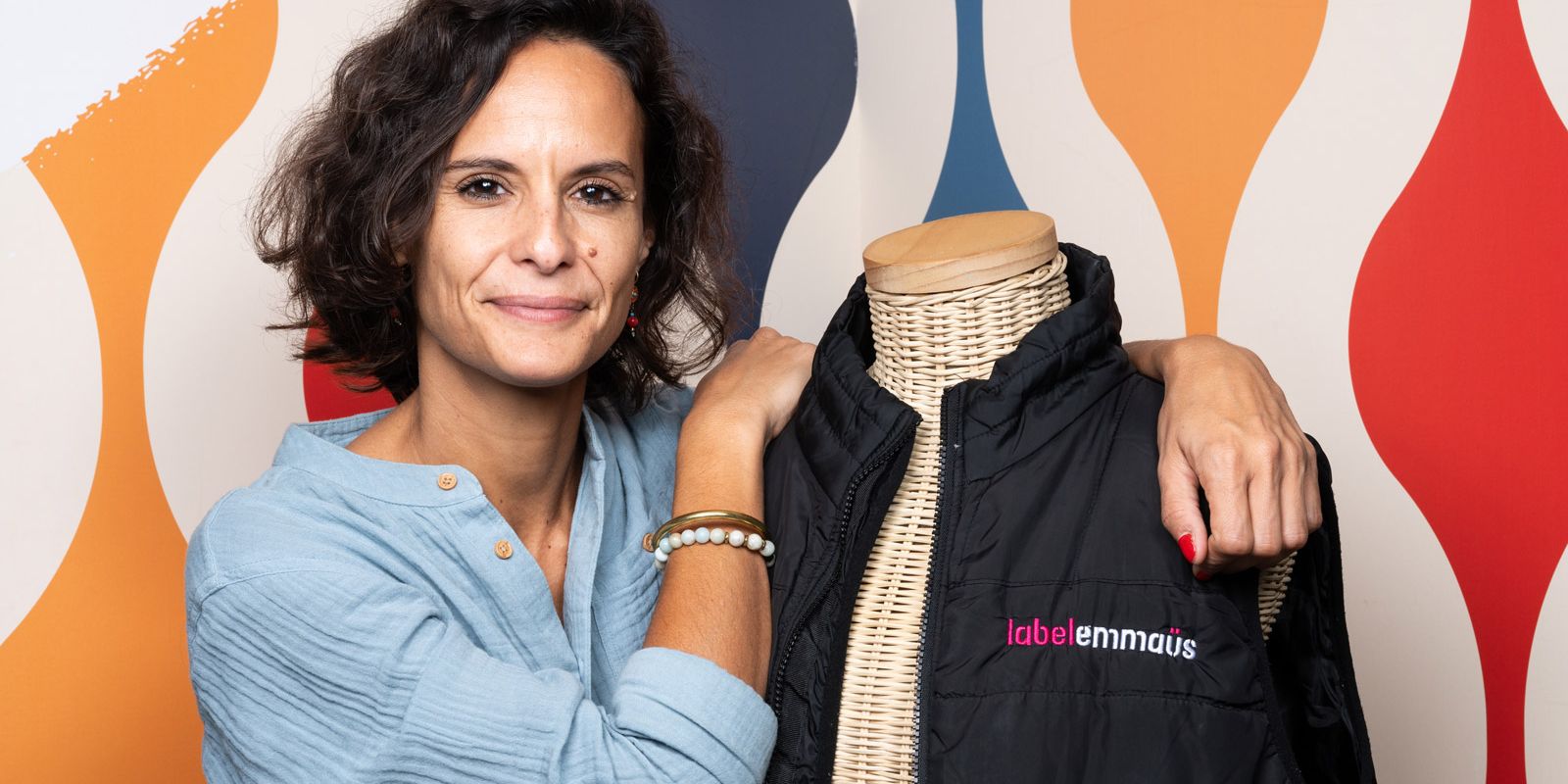
Responsible e-commerce is possible. Maud Sarda, co-founder and CEO of Label Emmaüs, intends to prove it. Created in 2016, the marketplace extends the well-known Emmaüs stores and embodies the same values of solidarity, circularity, and social inclusion.

One hundred thousand buyers, €4 million in sales volume, around 60 employees, more than 2.5 million products in the catalog, and 150,000 parcels shipped in 2024. Those are the figures. But the most important thing is the values it promotes. Label Emmaüs is not an e-tailer like any other. Created in 2016, the online sales site is a logical extension of the 550 Emmaüs solidarity stores across France, now familiar to everyone. “Label Emmaüs is a social enterprise of public interest (ESUS), explains Maud Sarda, co-founder and CEO of Label Emmaüs. As a cooperative collective-interest company, we support people entering the workforce. At our 1,800 sq. m. warehouse in Noisy-le-Sec, which is accessible by public transportation, 60 employees collect surplus stock from stores across the Île-de-France region; register 1,000 books a day using an in-house tool; check their condition; store the 350,000 books we offer for sale; pick orders; and ship them—preferably to pickup points, which we encourage through our pricing policy.” But Label Emmaüs is also a marketplace for all stores in the social and solidarity economy (SSE). “In addition to donations of secondhand products to Emmaüs associations, 200 stores are now present on our site, and we list their products for them,” Maud Sarda explains. The idea supported by everyone in the network is that it is possible to donate, shop responsibly by choosing secondhand goods, and sustain a solidarity-based project at the same time.
Secondhand Goods, Second Chances, and Environmental Responsibility
As a player in the circular economy, a means of combating waste, and an alternative to consumer society, this e-commerce platform—sometimes described as one of “second chances”—is very much in step with the times. “People often think that e-commerce is inherently worse for the environment than brick-and-mortar retail, the CEO comments. But it is possible to do things differently: by consolidating deliveries at pickup points or, for example, as is the case for 80% of the merchants we work with, by using reclaimed materials for packaging. The same applies when land has to be developed to install new warehouses even though this could be done on sites that have already been developed.” For Maud Sarda, while other players share the same motivations, they are too small to compete with e-commerce giants and their methods.
Growth Opportunities
In 2022, Label Emmaüs opened a second warehouse in the Lot-et-Garonne department. “The idea was to expand our online catalog, Maud Sarda recalls. But there are not enough of us in solidarity-based e-commerce to make these buildings profitable. We therefore had to end that venture recently, in order to focus on our historic warehouse in Noisy-le-Sec, where we are the sole tenant.” That warehouse is gradually becoming too small, however. “A 3,000 sq. m. facility would now be more suitable, because we want to diversify our business with a B2B offering for the tableware sector, including small secondhand decorative items, with a partner, Haworth, which specializes in office furniture,” Maud Sarda says. “We also plan to begin refurbishing office chairs.” The goal is to reach 20% of revenue in 2025. While it waits to move into a larger storage building, Label Emmaüs has benefited from Accenture’s advice through a skills-based corporate sponsorship program “to make the best use of the space, free up a little room for our future new activities, and optimize logistics processes.” The cooperative needs to reduce its logistics costs: “Our volumes are not attractive enough for carriers, which refuse to negotiate rates with us...” Maud Sarda regrets.
A School to Take Social Inclusion Even Further
To diversify its sources of revenue and go further in social inclusion, Label Emmaüs also founded a digital marketing school in 2019. “Each class at Label École creates its own store and takes theoretical courses taught by employees from companies such as L’Oréal, BlaBlaCar, and Salesforce, Maud Sarda explains. Students present their project orally before professionals. Ninety percent earn their diploma and can then pursue a work-study program or even create their own online store. Eighty percent of our students have found their path to success after attending our school. Through this alternative pathway, we help foster gender parity and diversity in the tech world.”


