Toulouse’s approach to organizing urban logistics
Inaugurated in December 2021, the Toulouse Logistique Urbaine facility foreshadows the last-mile logistics network for the Pink City and its surrounding area. It also stems from what is intended to be a win-win partnership between Toulouse Métropole and a consortium bringing together Semmaris, Poste Immo and Caisse d’Épargne Midi-Pyrénées.

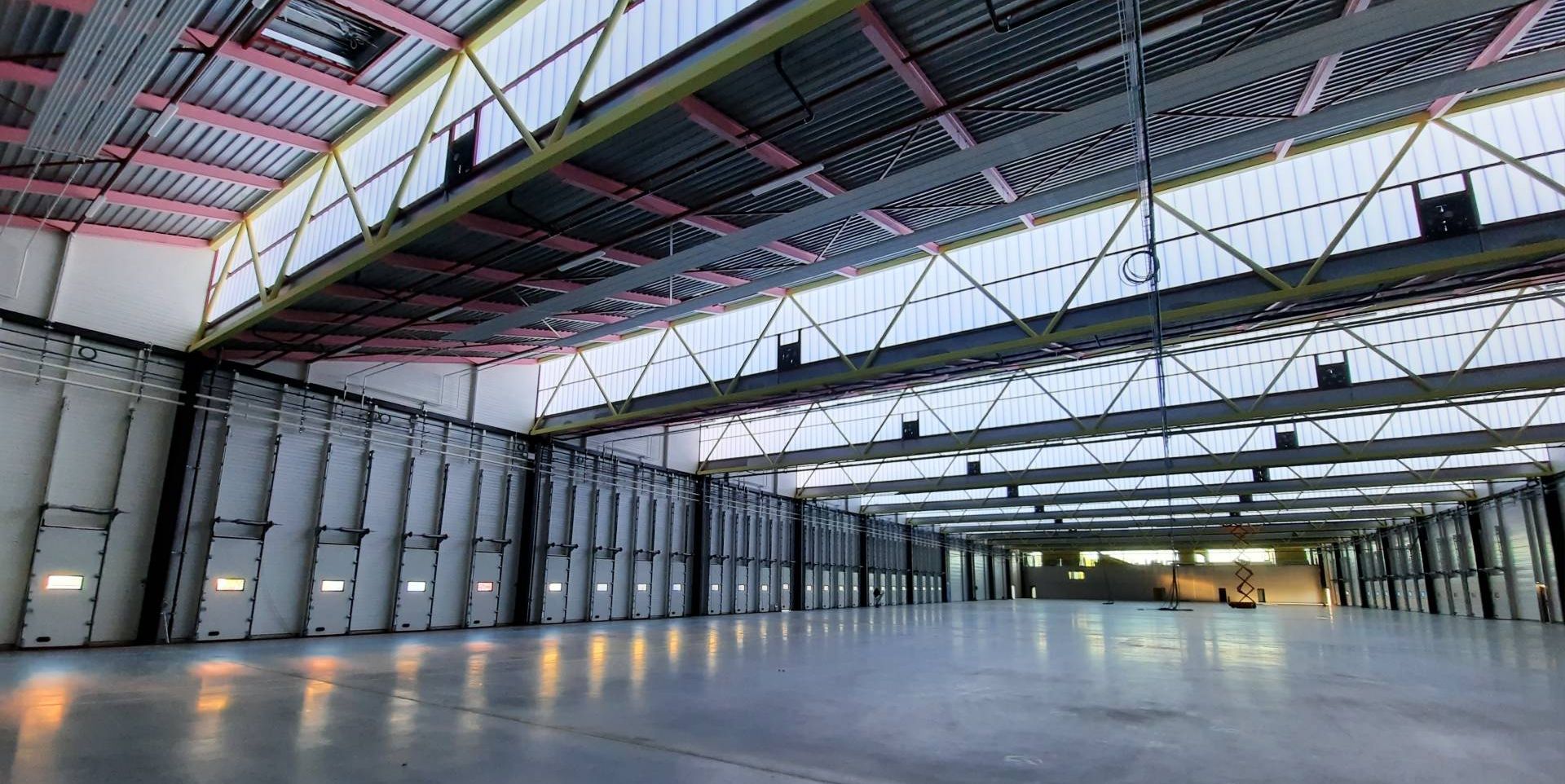
As demand for last-mile logistics space has surged in recent years, local authorities are taking up the issue. Their goals: optimize the organization of flows and meet the needs of the local economic fabric. With this in mind, a 19,500 m² facility was inaugurated in southwestern France in December 2021: Toulouse Logistique Urbaine.
A strategic site in relation to the city center and the MIN
“In 2017, we won a call for proposals launched by Toulouse Métropole to redevelop the former Fondeyre freight center into a facility dedicated to urban freight transport,” explains François Cantinaud, deputy CEO of Lumin’Toulouse. This entity, which brings together Semmaris (the company that manages the Rungis wholesale market), Poste Immo and Caisse d’Épargne Midi-Pyrénées, built and operates Toulouse Logistique Urbaine under a public-service delegation. It also manages the Toulouse Occitanie wholesale market (MIN), located a few hundred meters from the facility, which occupies a 9-hectare site.
“The local authority wanted to create synergies with the MIN while supplying the city center, located 4 kilometers away, and the metropolitan area with minimal impact on the environment and quality of life,” adds François Cantinaud, who is also president of Toulouse Logistique Urbaine. To turn this ambition into reality, the consortium demolished five obsolete buildings dating from the late 1970s and replaced them with two 200-meter-long, 40-meter-wide warehouses designed by the Paris-based architecture firm Experience. All with sustainability in mind.
Toulouse Logistique Urbaine relies on flexibility and cogeneration
“As the entire complex is intended to accommodate several tenants, we opted for high construction standards for the slab, ceiling height, loading-dock doors, and so on,” François Cantinaud explains. “In addition, the facility is organized into independent 500 m² units, making it easier to partition the interior of the buildings. All these features offer considerable flexibility and ensure the site’s long-term sustainability.”
The complex, which welcomes both private individuals through its central parking area dedicated to light vehicles and professionals via truck access along the sides of the buildings, is already occupied by UPS, La Poste and Urby (a subsidiary of La Poste and Banque des Territoires dedicated to urban logistics). Flower wholesaler FleuraMetz, which works with the neighboring MIN, has leased 750 m², while negotiations are underway for the remaining available space. Another sustainable feature worth noting is that the complex produces more energy than it consumes. This achievement is largely due to the use of a cogeneration boiler and enables Toulouse Logistique Urbaine to display the BEPOS Effinergie label. The positive impact of Toulouse Logistique Urbaine can also be measured across its host area.
A nearby CNG station and electric vehicles on site
“Since Toulouse’s low-emission zone took effect on March 1, we have been working from the outset of our project on environmentally friendly transportation methods,” François Cantinaud says. A CNG (compressed natural gas) station is located on the edge of the site, and UPS, La Poste and Urby will use electric vehicles for their deliveries. Discussions are also underway with Voies Navigables de France (VNF) to conduct an experiment in river logistics using the Canal latéral à la Garonne, which runs alongside the facility’s future 144-space truck parking lot.
A true forerunner of the last-mile logistics network across Toulouse Métropole, the site aims to handle 70,000 parcels a day. More than 350 people are expected to work there every day (including 70% drivers). The partnership therefore promises to be a win-win arrangement for the local authority and the Lumin’Toulouse consortium, which are committed to one another through 2039.