



Military-style logistics for the July 14 parade
Since 1945, the July 14 parade has been one of the highlights of the year for the military, as well as for the ten million French people who follow the event on the Champs-Élysées and on television. Considered a “ military operation ” in its own right, the parade has its own logistics. Report.

If the organization of the July 14 parade had to be summed up in a single word, it would undoubtedly be “ military .” Lieutenant Colonel Pierre-Etienne, who is in charge of the event’s logistics, is categorical: “ we make no distinction between the July 14 parade and a conventional operation in the field .” On the day itself, 6,500 military personnel parade on the Champs-Élysées, including 5,100 on foot, accompanied by more than 157 vehicles and pieces of equipment, 66 aircraft and 29 helicopters, brought to Paris for the occasion from bases across France.
The logistical rear bases of the July 14 parade
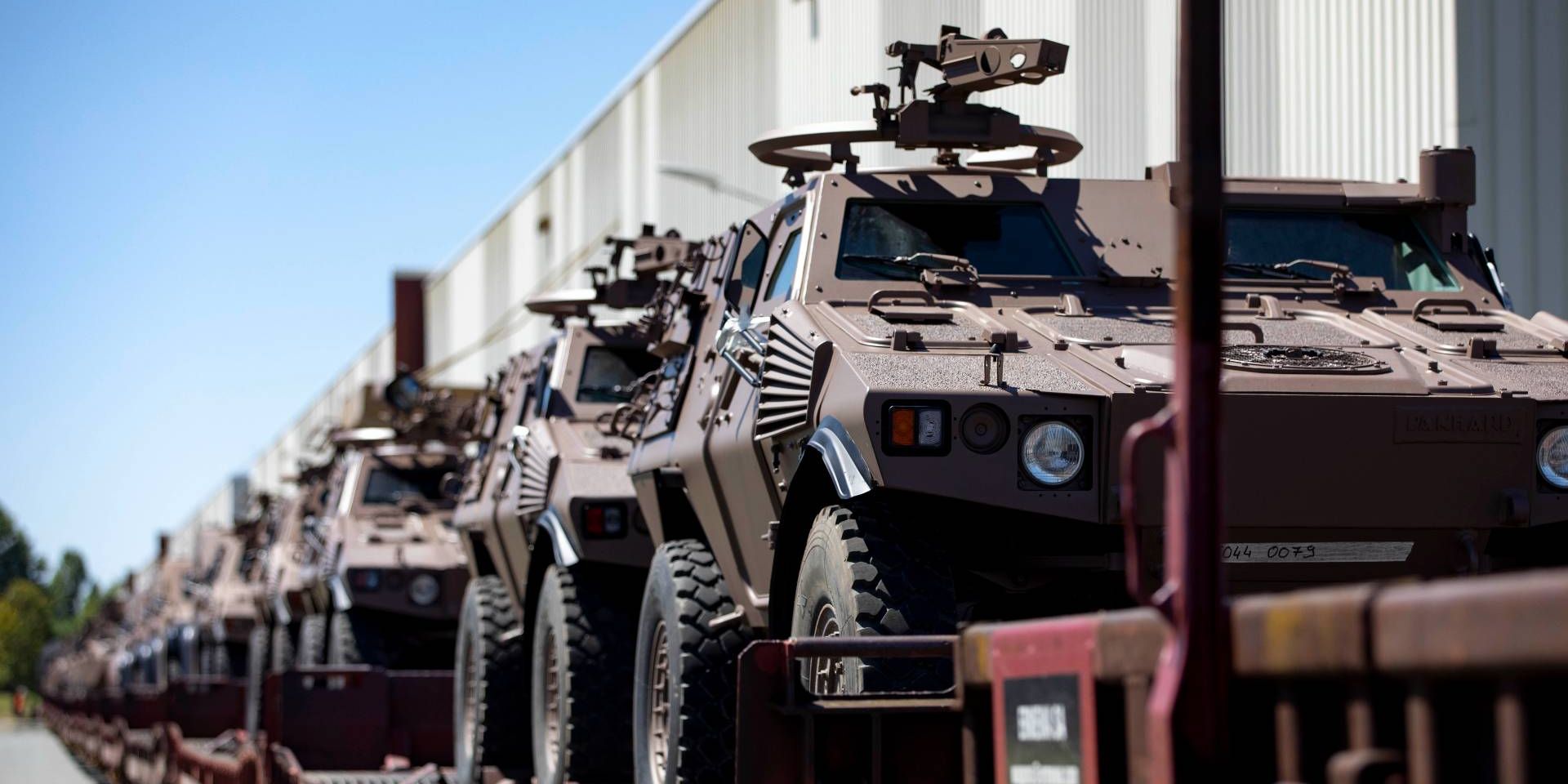
“ The Army does not have the means to afford ‘flowerpots’; the military personnel and vehicles parading on the Champs-Élysées come from operational theaters or military bases, explains Lieutenant Colonel Pierre-Etienne. Some of the vehicles in the parade may even be returning directly from the Sahel, where we have withdrawn part of our forces. ” Indeed, the Army temporarily makes its resources available for the occasion. Leclerc tanks, Light Protected Vehicles (PVP), Army equipment transporters, Light Armored Vehicles, Infantry Fighting Vehicles (VBCI), Light Reconnaissance and Support Vehicles (VLRA): all this equipment is taken from military bases for the occasion and returned to the sites the very next day.
The equipment and personnel begin arriving in the Paris region on June 15, one month before the parade. “ The equipment and vehicles are transported by road and rail, unloaded at military stations, stored, then transferred to the Champs-Élysées at dawn on July 14. ” They are not all stored in the same location, since the rehearsal sites differ. “ For the motorized parade, the main rehearsals take place on an airstrip in Brétigny-sur-Orge, for example. ” In addition, equipment storage is directly linked to the accommodation of military personnel in existing barracks or in base camps deployed for the occasion. “ The most distant are in Chartres, at an airfield, but most are near Paris, in Versailles, Saint-Cyr-L’École, Fort de Vincennes, Mont Valérien… We pack the comforter in the suitcase, as the saying goes! It is like being on a mission: we set up bivouacs. ”
Meticulous preparation
The date is fixed, and the broad outlines of the parade are known… Nevertheless, preparation work is colossal every year because different units take part. “ The July 14 parade is a succession of scenes. When we prepare the parade, we devise scenes and movements incorporated into what we call a ‘model,’ validated by the President of the Republic. ” While the parade lasts only two hours, it represents a year of work for Lieutenant Colonel Pierre-Étienne and his 15-person team (the extended planning group comprises 70 people in total, and all logistics functions are represented).
Preparation for one year’s July 14 begins on July 15 of the previous year. “ The very next day, we bring together the chiefs of staff and conduct an immediate RETEX (feedback review). From there, we already draw key lessons. We analyze whether there were delays, accidents or bottlenecks… We then meet in October for a later RETEX. From January 1, we plan the operation with three major meetings in January, April and June. It is a huge undertaking because 6,000 military personnel must be accommodated and hundreds of vehicles transported… ”.
Another major constraint : the parade takes place in the very heart of Paris. “ We can only set up a few hours beforehand, and everything must be back in order a few hours later. ” The team in charge of the parade therefore works closely with the City of Paris and the Paris Police Prefecture to secure all access points and “ clear the way ”—in other words, “ remove all traffic lights, signs and other street furniture that could obstruct the parade. ” Military and much more besides, the July 14 parade will continue to celebrate the French Army for years to come… thanks to well-honed logistics.


