



Toward Sustainable Logistics in Normandy: Agglo Seine-Eure at the Heart of SRADDET Transformations
Normandy is the first French region to have adopted the amendments to the Regional Plan for Planning, Sustainable Development and Territorial Equality (SRADDET) required by the Climate and Resilience Act. Some concern logistics. But what impact will they have on the region’s intermunicipal authorities? A concrete example from Agglo Seine-Eure, presented by its president, Bernard Leroy.

How will the SRADDET amendment affect your intermunicipal authority’s logistics sector?
Bernard Leroy : The dynamism of Agglo Seine-Eure, the Eure département’s leading economic hub, is founded on our industrial strength, which underpins our development, job creation and workforce integration. The SRADDET amendment will strengthen Seine-Eure’s economic appeal and thereby contribute to the momentum of the Seine corridor.
The aim is to decarbonize our industry, housing, travel and leisure activities, and to produce green energy; this is our vision of responsible production. In logistics, and in order to reduce the number of vehicles on the roads, we want to create two inland ports: the first in Alizay and the second at Val d’Hazey, as part of a “logistics of the future” hub. They will enable the development of territorial trimodal logistics via waterways, rail and roads.
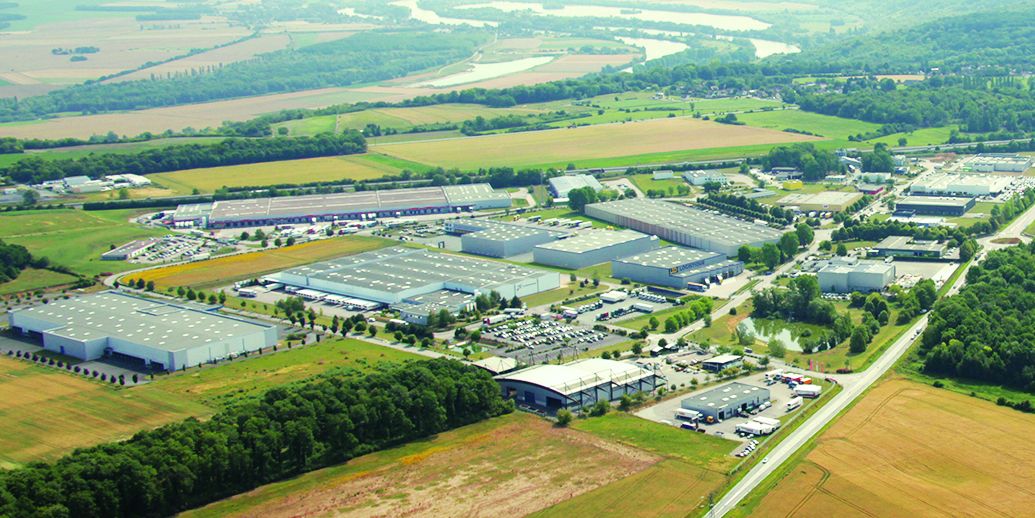
At the same time, since 2001 we have been implementing a land strategy to accommodate businesses, particularly industrial companies. Ecoparks, genuine business incubators, have been created and have made it possible to host industrial logistics essential to the development of industry and employment. As part of our economic development strategy, we are working to increase the density of areas dedicated to industrial logistics, limit the impacts associated with activities, and ensure the architectural and landscape integration of buildings, in order to accommodate sustainable, decarbonized logistics. We are regularly in touch with industrial companies to define their logistics needs as accurately as possible. It is an ongoing dialogue that drives us to seek performance in every respect.
Can you give us some concrete examples?
Bernard Leroy : Take the Val d’Hazey inland port. It will adhere to our decarbonization rationale and our commitment to low-impact development. Producing, yes—but producing well! For several years, we have been redeveloping former industrial brownfields, such as the CINRAM site, which has become a 4.0 hub dedicated to innovation and MICE tourism, and the Bonna-Sable site, which will soon host a new Hermès Group facility. Developed under the CPIER, a planning contract supported by the French State and the Normandy Region, the multimodal logistics park, whose creation we support and facilitate, will enable us to establish production and logistics companies, thereby reducing the number of trucks on the roads.
How was your intermunicipal authority involved in the SRADDET amendment?
Bernard Leroy : In a very simple, direct way. We are a public entity, so we are naturally involved in the amendment process. In particular, we take part in consultation workshops with Normandy’s other public intermunicipal cooperation establishments (EPCIs). We all share the same objective of decarbonizing industry and the same ambition of “Zero Net Land Take” (ZAN), and that is a good starting point. We want to protect our resources, and this strategic industrial and logistics partnership works very well among all stakeholders.
How do you work with other intermunicipal authorities to implement these amendments?
Bernard Leroy : The Climate and Resilience Act, adopted in 2021, established the legislative framework for combating climate change by setting national objectives for reducing land consumption, notably the ZAN target by 2050. Over a 10-year period (2021–2030), the pace of land take must be halved compared with actual consumption observed over the preceding ten years. The reduction in land take must then continue until the ZAN target is reached in 2050. The path has been set; the goal is clear.
We have a shared interest and, as a local authority, we must do everything possible to achieve these goals and protect our resources. Working relationships are facilitated by the State services, the interministerial delegation, CEREMA, DREAL, the Rouen urban planning agency, and the chambers of trades. We hold regular meetings with the other EPCIs to implement these amendments. In addition, since February 12, 2024, the Agglo has been a member of the regional ZAN commission. In this capacity, it represents the Eure département’s SCOTs in arbitrating projects of regional interest.


